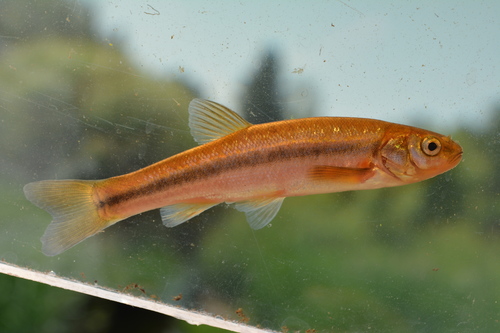
Northern Pearl Dace
Margariscus nachtriebi
A hidden gem of northern waters, the Northern Pearl Dace thrives in the cool, quiet corners of bogs and beaver ponds. This hardy minnow is a master of survival, flashing its iridescent scales and vibrant breeding colors in the clear headwaters of the North.
Quick Identification
Size
Typically 8-13 cm (3-5 inches) in length; occasionally reaching 16 cm (6.3 inches).
Colors
Dark olive or dusky green back with silver-white underparts; a subtle dark lateral stripe; breeding males develop vibrant orange or red bellies.
Key Features
- Distinctive dark lateral stripe running from snout to tail
- Small scales providing a pearly, iridescent sheen
- Breeding males exhibit a bright red or orange band on lower sides
- Small, slightly subterminal mouth
- Stocky, torpedo-shaped body
When You’ll See Them
Geographic range
Where Does the Northern Pearl Dace Live?
The Northern Pearl Dace is a quintessential inhabitant of the North American wilderness, spanning a broad geographic arc from the Atlantic coast of Canada and the northeastern United States across to the Rocky Mountains. It is most densely populated throughout the Canadian provinces, from the Maritime regions to the Yukon, and extends south into the Great Lakes and upper Mississippi River basins. This species is almost exclusively found in cold-water systems and is a key biological indicator of healthy northern aquatic ecosystems.
Basemap © OpenStreetMap contributors
Behavior
Northern Pearl Dace are social and resilient fish that typically congregate in small schools. They are highly adapted to the cold, often acidic waters of the northern boreal forest, where they are frequently found in the quiet, tea-colored waters of beaver ponds. Unlike many other minnow species, they are quite hardy and can tolerate lower oxygen levels often found in stagnant or boggy environments.
These fish spend most of their day actively foraging in the mid-water column or near the bottom. While they are generally peaceful, they can be quite opportunistic, darting quickly to the surface to snatch fallen insects during a hatch. During the spring spawning season, their behavior shifts as males become more territorial and active in shallower gravel beds, displaying their brilliant breeding colors to attract mates.
EverydayEarth exclusive
Camera Tips
To capture the Northern Pearl Dace on camera, you will need to go underwater. Use a waterproof action camera or a dedicated underwater trail camera. The best locations are the edges of beaver ponds or slow-moving sections of headwater streams where the water is clear. Place the camera on a weighted base or a small sandbag to keep it steady on the bottom, and aim it horizontally through the water column toward a patch of sunlight.
For the most dramatic footage, time your setup for the spring spawning season (late April to June). This is when the males display their striking red and orange bellies. Look for shallow areas with gravel or coarse sand, as the fish will congregate here to spawn. Setting your camera to a high frame rate (at least 60 frames per second) is essential, as these fish are fast swimmers and their darting movements can appear blurry at lower settings.
Since these fish are naturally curious but cautious, use a small mesh bait bag filled with freeze-dried bloodworms or crushed fish flakes to lure them into the camera's field of view. Position the bait about 18 to 24 inches away from the lens to ensure the fish stay in focus. In the peaty, "stained" water they often inhabit, try to place your camera in a spot where the sun is behind you, illuminating the fish from the front to better capture the iridescent, pearly sheen of their scales.
Similar Species
Species that look similar or are commonly confused with Northern Pearl Dace.
Frequently Asked Questions
Record Northern Pearl Dace at your habitat
Connect a camera to start building your own species record — AI identifies every visitor automatically.