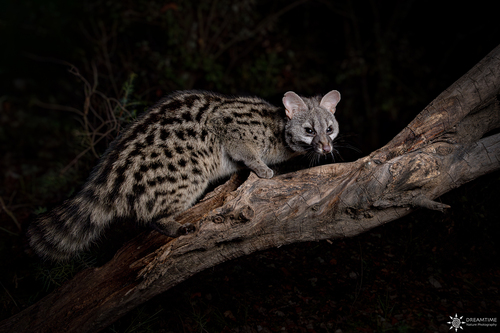
Northern Small-spotted Genet
Genetta genetta
The ghost of the garden, the Northern Small-spotted Genet is a master of nocturnal stealth. With its striking leopard-like spots and incredible climbing agility, this elusive visitor is a prize find for any backyard explorer.
Quick Identification
Size
Body length 42-58 cm (16-23 in) with a tail of 39-53 cm (15-21 in); Weight 1.3-2.5 kg (2.9-5.5 lbs)
Colors
Pale grey to yellowish coat with rows of black or dark brown spots; tail is boldly ringed with 8-10 black bands; black stripe runs along the spine.
Key Features
- Slender, cat-like body with short legs and retractable claws
- Bushy tail nearly as long as the body with distinct black rings
- Large, upright ears and a pointed face with white patches under the eyes
- A continuous dark crest or line running from the neck to the base of the tail
When You’ll See Them
Behavior
The Northern Small-spotted Genet is a master of the night, combining the agility of a cat with the sleekness of a mongoose. Although they look like felines, they are actually viverrids, more closely related to civets. These solitary creatures spend their daylight hours hidden in hollow trees, rock crevices, or abandoned burrows, emerging at dusk to hunt. They are remarkably agile climbers, often seen navigating the canopy with ease, using their long tails for balance as they leap between branches.
While largely solitary, genets are highly communicative through scent. They possess musk glands that they use to mark territories and signal their presence to other genets. In areas where they live near humans, they are known for being extremely shy and elusive. They rarely cause trouble, though they may occasionally investigate chicken coops or fruit gardens. Their presence in a backyard is a sign of a healthy ecosystem, as they are expert pest controllers, keeping local rodent and insect populations in check.
EverydayEarth exclusive
Camera Tips
To capture the Northern Small-spotted Genet, your camera placement should reflect their vertical world. While they do travel on the ground, they are far more comfortable on "highways" such as the tops of stone walls, low-hanging horizontal tree branches, or along the top rail of a fence. Mounting your camera about 3 to 5 feet off the ground, angled slightly downward toward a known crossing point, is often more effective than a standard ground-level setup. If you have an old stone wall or a woodpile, these are prime spots to monitor.
Because genets are exceptionally quick and move with a fluid, snake-like gait, standard trail camera triggers can sometimes miss them or only capture a tail. Set your camera to "Burst Mode" (3-5 photos per trigger) or, better yet, high-definition video mode with a 15-20 second duration. This allows you to see their incredible climbing mechanics and long-tail balance. Ensure your infrared flash is set to its highest intensity, as their dark spots and grey fur can sometimes blend into the night background without high-contrast lighting.
If you aren't seeing them naturally, you can entice them with scent. You don't need a heavy meal; a small amount of pungent bait like canned sardines or even a smear of peanut butter on a tree trunk can stop a passing genet long enough for a clear shot. Since they are attracted to the smell of other animals, placing your camera near an area where you've seen squirrels or mice is a natural strategy. In the summer, a shallow water basin or birdbath on the ground can also be a magnet for a thirsty genet.
Seasonal timing is less critical than timing of day, but be aware that they are most active on darker nights. During a full moon, they may stick closer to dense cover to avoid predators like owls. Position your camera facing north or south to avoid lens flare during the golden hours of dusk and dawn when they might still be finishing their nightly rounds. If you find a "latrine" (a specific spot where they repeatedly leave droppings), keep your camera there—genets are creatures of habit and will return to these marking sites frequently.
Similar Species
Species that look similar or are commonly confused with Northern Small-spotted Genet.
Rusty-spotted Genet
Has reddish-brown spots rather than black, and the tip of the tail is usually dark rather than white.
African Civet
Much larger and bulkier with a shorter, less bushy tail and a distinct 'mane' of hair along its back.
European Wildcat
Has a much sturdier, feline build with a thicker, blunter tail and lacks the distinct spotted pattern of the genet.
Frequently Asked Questions
Record Northern Small-spotted Genet at your habitat
Connect a camera to start building your own species record — AI identifies every visitor automatically.