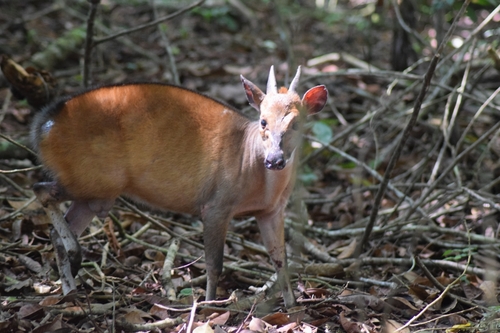
Ogilby's Duiker
Cephalophorus ogilbyi
A hidden gem of the African rainforest, the Ogilby's Duiker is a master of the undergrowth. With its striking mahogany coat and secretive nature, it is one of the most rewarding sightings for any trail camera enthusiast.
Quick Identification
Size
Shoulder height of 55 cm (22 in); weight ranges from 14–20 kg (31–44 lbs)
Colors
Rich mahogany or bright orange-brown coat with a distinct black stripe running along the spine; pale buff or whitish underbelly
Key Features
- Prominent black dorsal stripe from neck to tail
- Small, straight horns present in both sexes
- Arched back and shorter front legs for navigating thickets
- Large preorbital scent glands visible as slits below the eyes
When You’ll See Them
Behavior
Ogilby's Duiker is a shy and elusive forest-dwelling antelope. Unlike many of its close relatives that prefer the cover of night, this species is primarily diurnal, meaning it is most active during the daylight hours. They are largely solitary animals, though they are occasionally spotted in pairs. They are highly territorial and use the large glands beneath their eyes to rub scent onto branches and trunks to mark their home range.
The name 'duiker' comes from the Afrikaans word for 'diver,' which perfectly describes their behavior when startled. Rather than running across open ground, they take a series of diving leaps into the densest nearby undergrowth to vanish from predators. Because they are so reliant on primary rainforest, they are rarely seen in open spaces and are considered an indicator species for the health of a forest ecosystem.
EverydayEarth exclusive
Camera Tips
Capturing an Ogilby's Duiker on camera requires patience and strategic placement within old-growth forest environments. These animals are creatures of habit and utilize 'game trails'—narrow, cleared paths through the leaf litter. Position your camera along these trails at a height of about 18 to 24 inches. This 'knee-high' placement ensures you capture the profile of the animal, which is essential for identifying the characteristic dorsal stripe that distinguishes it from other duiker species.
Because they are fruit specialists, the best place to 'park' a camera for a long duration is near the base of large, fruit-bearing trees such as wild figs or Uapaca trees. If you notice freshly fallen fruit and small hoof prints in the soft earth, you have found a prime location. They are known to visit these sites shortly after sunrise when the forest floor is still quiet. Avoid placing cameras in direct sunlight, as the dappled light of the forest canopy can trigger false motion alerts and wash out the rich mahogany colors of their coat.
Since these animals are extremely wary, use a camera with a 'no-glow' or black infrared flash to avoid spooking them at dawn or dusk. A fast trigger speed (under 0.5 seconds) is vital because, despite their slow foraging pace, they can disappear into the brush in an instant if they catch a scent or sound. If your camera settings allow, record short 10-15 second video clips; this often captures their fascinating scent-marking behavior, where they press the glands on their face against low-hanging twigs.
Similar Species
Species that look similar or are commonly confused with Ogilby's Duiker.
Frequently Asked Questions
Record Ogilby's Duiker at your habitat
Connect a camera to start building your own species record — AI identifies every visitor automatically.