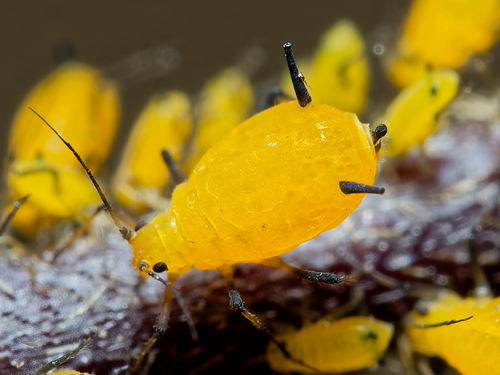
Oleander Aphid
Aphis nerii
The Oleander Aphid is a tiny, brilliant yellow gem of the garden world. Often found in bustling colonies on milkweed, these little clones are a masterclass in survival and chemical defense.
Quick Identification
Size
1.5 to 2.6 mm (0.06 to 0.10 inches) in length
Colors
Brilliant lemon-yellow body with contrasting jet-black cornicles, antennae, and legs
Key Features
- Vivid yellow pear-shaped body
- Two prominent black cornicles (tail-pipes) at the rear
- Black legs and antennae
- Usually wingless, forming dense clusters on stems
When You’ll See Them
Behavior
Oleander Aphids are fascinating examples of communal living and rapid reproduction. Unlike many other insects, these aphids are almost exclusively female and reproduce through parthenogenesis, meaning they essentially clone themselves. You will often see them in dense, unmoving clusters on the tender new growth of their host plants, where they use needle-like mouthparts to drink nutrient-rich sap.
Because they feed on plants like milkweed and oleander, they ingest toxic chemicals called cardenolides. These toxins don't hurt the aphid but make them extremely distasteful to many predators. Their bright yellow color serves as a "keep away" sign to birds. However, some specialized predators, like the larvae of hoverflies and certain tiny parasitic wasps, have evolved to feast on them despite the chemical defense.
EverydayEarth exclusive
Camera Tips
Capturing high-quality footage of Oleander Aphids requires a different approach than filming birds or mammals because of their tiny size. Standard trail cameras usually have a minimum focus distance of several feet, which will leave these aphids as blurry yellow blobs. To succeed, you should use a camera with a macro lens or a specialized close-up attachment. Position your camera just inches away from the tender stems of a milkweed or oleander plant where you see the first signs of yellow activity.
Since aphids move very slowly, they are the perfect subjects for time-lapse photography. Set your camera to take a photo every 15 to 30 minutes over several days. When played back, you will see the colony "bloom" across the plant like a slow-motion explosion. This is a fantastic way to document their incredible rate of reproduction and how they gradually move up the stem to reach the freshest sap.
Lighting is your best friend when filming these bright insects. Because they are often found on the undersides of leaves or tucked into crevices, shadows can obscure their detail. Try to position your camera so the morning sun hits the colony directly, highlighting their glossy yellow carapaces. If you are using a backyard camera with built-in LEDs, ensure they aren't so bright that they wash out the yellow color into a white glare.
Keep an eye out for "action" shots by watching for predators. If you see a ladybug or a green lacewing near the colony, start your video recording. These interactions are dramatic and provide a glimpse into the complex food web in your garden. Also, look for winged aphids; when a colony gets too crowded, some individuals will grow wings to fly to a new plant, which is a rare and exciting transition to capture on camera.
Similar Species
Species that look similar or are commonly confused with Oleander Aphid.
Frequently Asked Questions
Record Oleander Aphid at your habitat
Connect a camera to start building your own species record — AI identifies every visitor automatically.