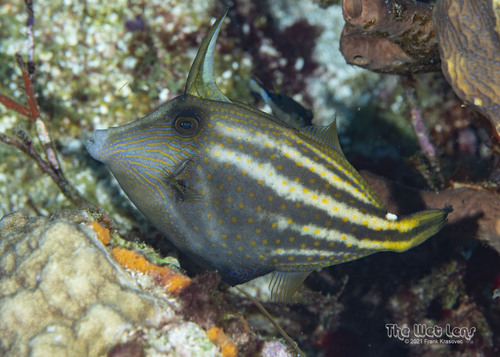
Orangespotted Filefish
Cantherhines pullus
A master of disguise with a vibrant personality, the Orangespotted Filefish is a gem of the Atlantic reefs. Recognizable by its sandpaper-like skin and brilliant orange flecks, it adds a splash of color to every coral garden.
Quick Identification
Size
Typically 12 to 20 cm (5 to 8 inches) in length; maximum recorded length is 25 cm (10 inches).
Colors
Olive-brown to gray body covered in small, bright orange spots; tail base often features a prominent white spot on the upper side.
Key Features
- Distinctive orange spots across the entire body
- White spot on the upper base of the tail
- Sandpaper-like skin texture
- Single large retractable dorsal spine above the eyes
When You’ll See Them
Geographic range
Where Does the Orangespotted Filefish Live?
The Orangespotted Filefish is a staple of the warm Atlantic waters. In the Western Atlantic, its native range spans from the coastal waters of Massachusetts down through the Caribbean Sea and the Gulf of Mexico, reaching as far south as the coast of Brazil. It is also found in the Eastern Atlantic, specifically inhabiting the tropical waters around the West African coast and the islands within the Gulf of Guinea.
Basemap © OpenStreetMap contributors
Behavior
The Orangespotted Filefish is a wary and somewhat shy resident of the reef. Unlike many bolder reef fish, they often retreat into crevices or hide among sea fans and corals when they feel threatened. They are diurnal, spending their daylight hours picking at the reef surface for food. They are frequently seen in pairs, suggesting a monogamous social structure during the breeding season, though they can also be found as solitary individuals.
These fish are masters of subtle camouflage, possessing the ability to darken or lighten their coloration to blend in with the surrounding coral or rocky substrate. When a predator approaches, they use their large first dorsal spine to lock themselves into a hole or crevice, making it nearly impossible to be extracted. Their movement is unique; they primarily use their dorsal and anal fins for propulsion, which gives them a graceful, fluttering appearance as they navigate the reef.
EverydayEarth exclusive
Camera Tips
Capturing the Orangespotted Filefish requires a specialized underwater setup, such as an AI-powered reef camera or a waterproof trail cam mounted on a stable reef structure. Position your camera near gorgonian sea fans or large barrel sponges, as these are favorite foraging spots where the fish will linger. Aim for a side-profile angle at a distance of about 2 to 3 feet; since these fish are naturally shy, a stationary, unobtrusive camera is far more effective than a handheld device.
Because they are diurnal, ensure your camera is programmed to record during peak daylight hours when the sun is directly overhead, typically between 10 AM and 2 PM. This lighting is essential to capture the vivid orange spots and the subtle white markings on the tail that define the species. High-resolution settings (4K if available) are vital because the intricate, sandpaper-like texture of their skin is a key identification feature that often disappears in lower-quality footage.
If you are using an AI-trigger system, calibrate it to recognize the distinctive oval, compressed body shape and the upright dorsal spine. Be mindful of the ocean surge; use a weighted tripod or a heavy-duty reef clamp to prevent the camera from swaying. Constant movement from waves can trigger false positives on motion-sensing models. In the winter months, you may have better luck placing cameras on slightly deeper reef slopes where water temperatures remain more consistent.
Similar Species
Species that look similar or are commonly confused with Orangespotted Filefish.
Frequently Asked Questions
Record Orangespotted Filefish at your habitat
Connect a camera to start building your own species record — AI identifies every visitor automatically.