Pacific Brook Lamprey
Occidentis pacifica
A hidden gem of Pacific Northwest waterways, this 'living fossil' spends years tucked in the mud before emerging for a spectacular spring dance in shallow gravel streams.
Quick Identification
Size
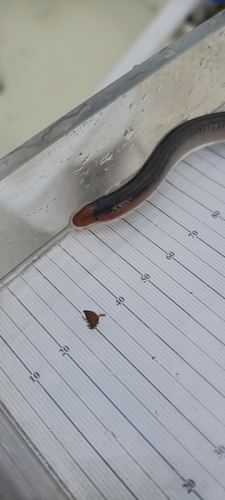
10–17 cm (4–6.7 inches) in length; weight is typically under 50 grams (1.8 ounces).
Colors
Uniform dark olive, brown, or slate-grey on the dorsal side, fading to a lighter tan, yellowish, or silvery-white belly.
Key Features
- Slender, eel-like body without scales
- Seven distinct pore-like gill openings behind each eye
- Single dorsal fin with a shallow notch separating it into two lobes
- Small, hooded sucker mouth with blunt, non-functional teeth
When You’ll See Them
Geographic range
Where Does the Pacific Brook Lamprey Live?
The Pacific Brook Lamprey is native to the western coast of North America. Its core range extends from British Columbia in Canada southward through the coastal and inland waterways of Washington and Oregon, reaching as far south as the San Joaquin River drainage in California. They are strictly freshwater residents, primarily found in the tributaries of the Columbia River and various smaller coastal watersheds along the Cascadia margin.
Basemap © OpenStreetMap contributors
Behavior
Once they reach maturity, they undergo a dramatic metamorphosis during the fall, developing eyes and a functional (though non-feeding) sucker mouth. In the spring, the adults emerge from the mud to spawn. They are known for their communal nesting behavior, where they use their mouths to lift and move small stones to create a shallow depression in the gravel. Unlike their larger relatives, they never travel to the ocean and spend their entire lives within a few miles of where they hatched.
Because they do not feed as adults, their final life stage is focused entirely on reproduction. After a frantic few weeks of spawning in clear, shallow riffles, the adults die, providing a final pulse of nutrients to the stream. They are rarely seen by humans except during this brief spring window when they congregate in shallow water.
EverydayEarth exclusive
Camera Tips
Capturing the Pacific Brook Lamprey requires an underwater approach. Use a waterproof action camera or a specialized underwater trail camera capable of high-definition video. The best placement is in shallow, clear-water riffles during the spring (March to June). Look for 'redds'—small depressions in the gravel where stones have been cleared away—as these are active spawning sites. Secure your camera to a weighted plate or a low-profile tripod to keep it stable against the current, and angle the lens slightly upward to capture the lampreys as they wriggle over the rocks.
Lighting is a challenge in stream environments. During the day, position your camera so the sun is behind it to avoid glare on the water's surface, but be mindful of shadows that might spook the fish. For nighttime captures, use a camera with 'No-Glow' infrared (IR) LEDs. Lampreys are sensitive to bright white light, and IR allows you to see their nocturnal movements without disrupting their natural behavior. Ensure your camera is set to record short video clips (15–30 seconds) rather than still photos, as their movement is their most identifying characteristic.
Because these lampreys do not eat as adults, you cannot use bait to attract them. Instead, you must rely on 'structural attraction.' Find an area where the stream narrows or where a natural obstacle creates a small resting pool next to a fast-moving riffle. These bottleneck areas are high-traffic zones during the spawning run. If you have a backyard stream, maintaining a healthy riparian zone with overhanging vegetation will provide the cover they need to feel safe enough to enter your camera's field of view.
Similar Species
Species that look similar or are commonly confused with Pacific Brook Lamprey.
Western Brook Lamprey
Nearly identical in appearance, but can be distinguished by subtle differences in the arrangement of teeth on the oral disc and slight variations in genetic range.
Pacific Lamprey
Much larger (up to 76 cm), parasitic as adults, and migrates from the ocean to freshwater to spawn.
Frequently Asked Questions
Record Pacific Brook Lamprey at your habitat
Connect a camera to start building your own species record — AI identifies every visitor automatically.