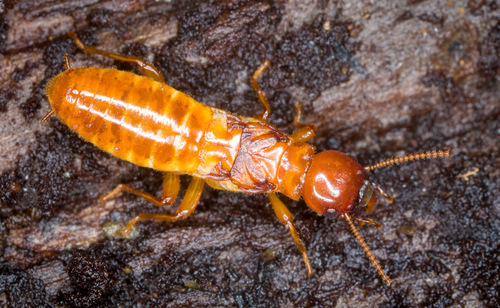
Pacific Dampwood Termite
Zootermopsis angusticollis
The Pacific Dampwood Termite is the giant of the termite world, a master of decomposition that thrives in the misty forests of the Pacific Northwest.
Quick Identification
Size
Workers: 10-15mm (0.4-0.6 in); Soldiers: up to 20mm (0.8 in); Alates: up to 25mm (1 in) including wings
Colors
Nymphs are creamy-white; soldiers have reddish-brown heads; winged swarmers are dark brown with smoky wings
Key Features
- Largest termite species in North America
- Soldiers have massive heads with long, black, serrated mandibles
- Thick waist and straight antennae unlike ants
When You’ll See Them
Geographic range
Where Does the Pacific Dampwood Termite Live?
The Pacific Dampwood Termite is a signature species of the humid West Coast of North America. Its native range extends from the southern tip of British Columbia down through the coastal forests of Washington, Oregon, and California, reaching into the northern parts of Baja California. While they are most concentrated along the foggy coastal belt, they can also be found in inland damp pockets of Idaho and Nevada, though they rarely survive outside of the moist Pacific maritime climate.
Basemap © OpenStreetMap contributors
Behavior
Pacific Dampwood Termites are fascinating social insects that live in relatively small, primitive colonies. Unlike the more common subterranean termites, they do not require contact with the soil and do not build mud tubes. Instead, they spend their entire lives within the damp, decaying wood that serves as both their home and their food source. They are highly sensitive to desiccation and rely on the high moisture content of rotting logs to stay hydrated.
The colony structure is unique because it lacks a true worker caste; instead, the young termites, or nymphs, perform the labor for the colony until they eventually molt into soldiers or winged reproductives. While they are often viewed as pests when they move into water-damaged homes, they are vital decomposers in forest ecosystems, accelerating the breakdown of fallen timber and recycling nutrients back into the soil.
EverydayEarth exclusive
Camera Tips
To capture these elusive insects on a backyard camera, timing is everything. The most dramatic footage comes from the 'swarming' events that occur on warm, humid evenings between August and October. Pacific Dampwood Termite alates (winged swarmers) are strongly attracted to light. Position your camera near an outdoor porch light or a window where indoor light spills out. Using a macro lens or a camera with a close-focusing distance of 10-20cm is essential to see the detail of their smoky wings and thick bodies.
If you are looking for activity during the day, focus your camera on a known 'infestation' point like a damp, rotting log or an old stump. Look for 'kick-out' holes—small openings where termites eject distinctive oval-shaped fecal pellets. Setting a trail camera at ground level using a time-lapse mode (one photo every 30 seconds) can catch soldiers guarding these openings or nymphs briefly appearing to clear debris. Because they are light-sensitive, use a camera with 'No-Glow' 940nm infrared LEDs to avoid startling them at night.
For those using AI-powered cameras, ensure the device is mounted on a stable stake or low-profile tripod. Vibrations from footsteps or heavy winds can cause the termites to retreat deep into the wood. If you want to encourage them into view for a photo, avoid using chemical baits; instead, ensure there is a piece of sacrificial, water-soaked Douglas fir or redwood nearby, which are their preferred wood types in their native range. Just be sure this wood isn't touching your home's foundation!
Similar Species
Species that look similar or are commonly confused with Pacific Dampwood Termite.
Frequently Asked Questions
Record Pacific Dampwood Termite at your habitat
Connect a camera to start building your own species record — AI identifies every visitor automatically.