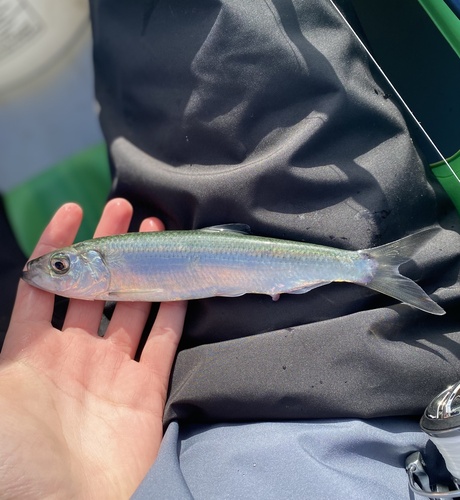
Pacific Herring
Clupea pallasii
The silver pulse of the Pacific coast, these shimmering voyagers are the foundation of the marine ecosystem. Witness the spectacular arrival of the herring schools as they transform the shoreline into a flurry of life each spring.
Quick Identification
Size
Typically 15-25 cm (6-10 inches) in length, though they can reach up to 38 cm (15 inches) and weigh up to 0.5 kg (1.1 lbs).
Colors
Iridescent silver sides and belly with a dark, metallic blue-green or olive back; no prominent spots or stripes.
Key Features
- Deeply forked tail fin
- Large, easily detached silvery scales
- Protruding lower jaw
- No spines in fins
- Slender, streamlined body shape
When You’ll See Them
Behavior
Pacific Herring are highly social schooling fish, moving in vast, shimmering groups that can number in the millions. This schooling behavior is a primary defense mechanism, creating a 'confusion effect' for the countless predators that rely on them for food. They are considered a keystone species because they convert tiny plankton into energy that supports whales, seals, salmon, and eagles.
During the spawning season, which typically occurs in late winter or early spring, herring migrate from the open ocean into shallow coastal bays and estuaries. This is one of nature's great spectacles, as the males release so much milt that the surrounding seawater can turn a milky turquoise color. Unlike some other migratory fish, Pacific Herring do not die after spawning and can return to breed for several years.
EverydayEarth exclusive
Camera Tips
Capturing Pacific Herring requires a specialized approach since they are underwater residents. If your 'backyard' includes a dock, pier, or waterfront bulkhead, the best strategy is to use a submersible action camera or a waterproof trail camera mounted to a weighted PVC frame. Position the camera at a depth of 3 to 6 feet, facing toward a patch of eelgrass or submerged kelp, as these are the primary surfaces where herring deposit their sticky eggs during spawning season.
To attract a school into the frame, consider using a high-intensity green or white submersible LED light at night. Herring are phototactic and will often circle the light source, providing a mesmerizing 'silver rain' effect on your footage. Ensure your camera is set to a high frame rate (at least 60fps) because these fish move with incredible speed and agility; standard 30fps video may appear blurry during fast schooling maneuvers.
The most dramatic footage is captured during the spawning window. Monitor local wildlife reports for 'herring runs' in your area. During these events, the water becomes crowded and chaotic. Aim your camera toward the shoreline at a 45-degree downward angle to catch the interaction between the fish and the vegetation. Since the water can become murky with milt during spawning, a wide-angle lens with a short focal distance will yield the clearest results.
Similar Species
Species that look similar or are commonly confused with Pacific Herring.
Pacific Sardine
Sardines have a row of dark spots along their silver sides and ridges on their gill covers, which herring lack.
Surf Smelt
Smelt have a small adipose fin (a fatty fin between the dorsal and tail), which herring do not have.
American Shad
Shad are generally larger and have a distinct notched upper jaw and one or more dark spots behind the gill opening.
Frequently Asked Questions
Record Pacific Herring at your habitat
Connect a camera to start building your own species record — AI identifies every visitor automatically.