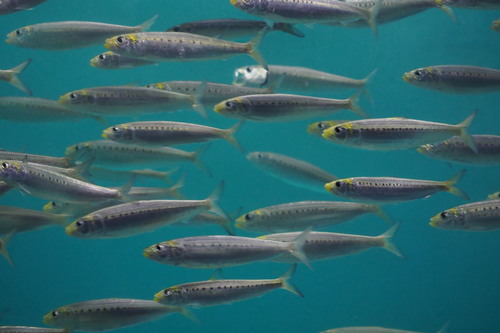
Pacific Sardine
Sardinops sagax
Experience the mesmerizing dance of the ocean’s silver nomads. From massive bait balls to shimmering coastal schools, the Pacific Sardine is the heartbeat of our marine ecosystem.
Quick Identification
Size
Length up to 40 cm (16 inches); typically 20-30 cm (8-12 inches); weight up to 0.5 lbs (225g)
Colors
Iridescent blue-green back with silvery-white sides and belly; features a distinctive row of black spots along the upper flank
Key Features
- Streamlined, spindle-shaped body
- Row of dark spots along the upper side
- Radiating bony ridges on the operculum (gill cover)
- Large, thin scales that detach easily
- Silvery iridescent underbelly
When You’ll See Them
Behavior
Pacific Sardines are highly social, pelagic fish known for forming massive, shimmering schools that can contain millions of individuals. These schools serve as a primary defense mechanism against predators, creating a 'bait ball' that confuses hunters like dolphins, sea lions, and sharks. They are constantly on the move, migrating seasonally along the coast to follow nutrient-rich cold water currents.
As filter feeders, they play a vital role in the marine ecosystem, converting microscopic plankton into energy for larger predators. While they don't interact directly with humans in a domestic sense, they are a cornerstone of coastal economies and a frequent sight for boaters and pier-fishers. Their populations are famously cyclical, booming and crashing over decades based on ocean temperature shifts known as the Pacific Decadal Oscillation.
EverydayEarth exclusive
Camera Tips
Capturing the Pacific Sardine requires an underwater camera setup, ideally positioned near coastal structures like pier pilings or dock floats where schools often congregate for protection. For the best results, mount your camera 3-6 feet below the water surface facing slightly downward to catch the sunlight reflecting off their silvery scales. If you have a 'backyard' dock, a stationary underwater housing with a wide-angle lens is perfect for capturing the sweeping motion of a passing school.
To attract sardines to your camera’s field of view, consider using a 'chum bag' or a mesh container filled with oily fish scraps or crushed shellfish suspended just out of frame. The scent trail will draw them in, and the movement of the school will trigger AI-detection systems. Since sardines are fast-moving, set your camera to a high frame rate (at least 60fps) or a rapid burst mode to avoid motion blur and capture the intricate patterns of their schooling behavior.
Clarity is your biggest challenge in marine environments. Ensure your camera lens is treated with a hydrophobic coating to prevent algae buildup, and try to film during high tide when the water is typically clearest. In low-light conditions or at dusk, avoid using strong white LEDs which can overexpose their highly reflective silver sides; instead, use a diffused natural light or a low-intensity green light, which sardines are less likely to be spooked by.
Maintenance is key for salt-water cameras. If you are using a trail camera in an underwater housing, check the seals weekly and rinse the exterior with fresh water to prevent salt crystallization. For those using smart-detection cameras, adjust the sensitivity to 'medium' to ensure the shimmering light reflections on the water surface don't create thousands of false-positive recordings, focusing the AI instead on the distinct shape of the fish.
Similar Species
Species that look similar or are commonly confused with Pacific Sardine.
Frequently Asked Questions
Record Pacific Sardine at your habitat
Connect a camera to start building your own species record — AI identifies every visitor automatically.