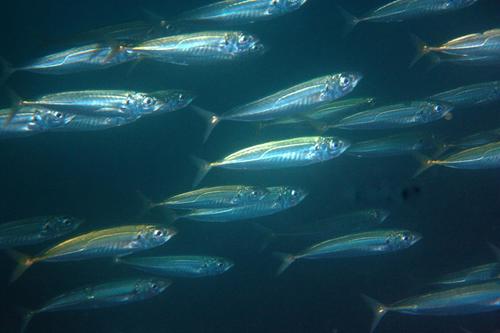
Pacific Jack Mackerel
Trachurus symmetricus
The silver streak of the West Coast, the Pacific Jack Mackerel is a marvel of aquatic engineering. Known for their incredible speed and shimmering schools, these fish bring the wild energy of the Pacific Ocean right to our coastal doorsteps.
Quick Identification
Size
Typically 30-55 cm (12-22 inches), but can reach up to 81 cm (32 inches) and weigh up to 2 kg (4.4 lbs).
Colors
Metallic iridescent blue to olive-green on the back, transitioning to a bright silvery-white underside; features a small dark spot on the gill cover.
Key Features
- Prominent row of sharp, bony scutes along the lateral line near the tail
- Elongated, streamlined torpedo-shaped body
- Deeply forked tail fin with a narrow base (caudal peduncle)
- Two distinct dorsal fins, the first having 8 spines.
When You’ll See Them
Behavior
Pacific Jack Mackerel are highly social, pelagic fish known for forming massive, tight-knit schools. These schools serve as a primary defense mechanism against larger predators like sea lions, sharks, and tuna. While they spend much of their time in offshore waters up to 600 miles from the coast, they frequently migrate into shallower inshore areas, especially during the warmer months.
These fish exhibit a fascinating vertical migration pattern, often remaining in deeper, cooler waters during the day and rising toward the surface at night to feed. In coastal areas, they are frequently seen circling pier pilings or darting through kelp forests. They are not shy around human structures and are often the most common species encountered by night-time anglers and underwater observers on the West Coast.
EverydayEarth exclusive
Camera Tips
Capturing the Pacific Jack Mackerel requires an underwater setup, ideally an action camera like a GoPro or a specialized aquatic trail camera with a waterproof housing. If you live on a coastal property or have access to a private dock, the best placement is 3 to 6 feet below the water line, facing slightly downward. Mounting your camera to a pier piling or using a weighted 'drop-cam' rig on the seabed near a kelp edge will yield the most natural behavior. Use a wide-angle lens setting to capture the movement of the entire school.
Because these fish are highly attracted to light, you can significantly increase your chances of a sighting by using a submersible green or white LED light at night. The light attracts the zooplankton that the mackerel feed on, creating a 'bait ball' effect directly in front of your lens. If you are using a light, position the camera about 2-3 feet away from the light source, angled so the light illuminates the fish from the side rather than shining directly into the lens, which causes glare.
Pacific Jack Mackerel move exceptionally fast. To avoid a blurry silver streak, set your camera to a high frame rate, at least 60 frames per second (fps). This allows you to slow down the footage in post-production to see the intricate details of their scutes and the shimmering patterns of their scales. If your camera supports it, use a 'loop recording' mode so you can leave the camera submerged for several hours and only save the highlights when the school passes through.
For baiting, a mesh chum bag filled with ground sardines or oily fish scraps hanging just above the camera's field of view is incredibly effective. Seasonal timing is also key; while they are present year-round, you will see the largest and most active schools during the late summer when coastal water temperatures rise. During these windows, look for 'boils' on the water surface—this indicates a school is actively feeding and is the perfect time to deploy your gear.
Similar Species
Species that look similar or are commonly confused with Pacific Jack Mackerel.
Pacific Chub Mackerel
Features dark, wavy zig-zag patterns on its back and lacks the sharp bony scutes found along the lateral line of the Jack Mackerel.
Chilean Jack Mackerel
Nearly identical in appearance but is generally found much further south in the Pacific, primarily off the coast of South America.
Frequently Asked Questions
Record Pacific Jack Mackerel at your habitat
Connect a camera to start building your own species record — AI identifies every visitor automatically.