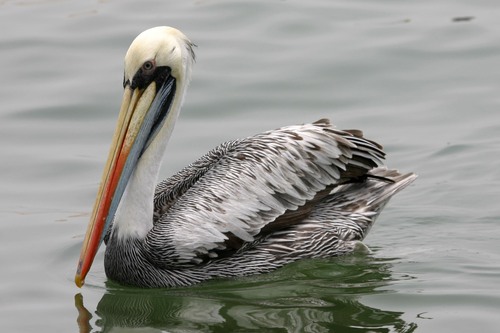
Peruvian Pelican
Pelecanus thagus
A massive master of the Humboldt Current, the Peruvian Pelican is an iconic sight along the South American coast. Known for its spectacular plunge-diving and vibrant breeding colors, this giant bird is a favorite for coastal wildlife observers.
Quick Identification
Size
Length 115-152 cm (45-60 in); wingspan 2.28-2.48 m (7.5-8.1 ft); weight 5-7 kg (11-15 lbs)
Colors
Dark grey-brown body with white mottling; breeding adults have a white crown and neck; bill is a mix of red, yellow, and blue-grey with a blue-grey pouch
Key Features
- Massive wingspan approaching 8 feet
- Distinctive blue-grey throat pouch with red tip
- Darker plumage than most other pelican species
- Prominent tuft of feathers on the back of the head during breeding
When You’ll See Them
Geographic range
Where Does the Peruvian Pelican Live?
Native to the rich waters of the Humboldt Current, the Peruvian Pelican is found along the Pacific coast of South America. Its primary range extends from northern Peru near Piura down through central Chile to roughly 33 degrees south. While they are residents of this coastal strip, they are frequent visitors to southern Ecuador and the southern fjords of Chile, following the movement of fish stocks.
Basemap © OpenStreetMap contributors
Behavior
These birds are well-known for their interactions with the local fishing industry. They are a common sight at piers and harbors, where they wait patiently for scraps or discarded bycatch. While they are generally tolerant of human presence in these settings, they remain wary and protective of their nesting sites on offshore islands, which are often shared with other seabirds like boobies and cormorants.
EverydayEarth exclusive
Camera Tips
To capture the Peruvian Pelican on camera, focus on high-activity coastal 'resting' spots. These include the flat surfaces of breakwaters, pier railings, or large coastal boulders where the birds go to dry their wings. Position your camera at a height of 3 to 4 feet, roughly level with the bird's chest if they are perched on a dock. Because of their massive size, ensure your camera is positioned at least 15 feet away to avoid 'clipping' their wings when they stretch or take flight.
Salt spray is your biggest challenge. Always use a weather-sealed camera housing and consider applying a water-repellent coating to the lens. Check your gear frequently, as salt can build up quickly and create a hazy 'dreamy' effect that ruins clarity. If you are setting up near a fishing pier, time your captures for when boats are returning to port, as this triggers intense social activity and pouch-expanding displays.
Use a fast shutter speed (at least 1/1000s) even for perched birds, as they frequently shake their heads or flap their wings with surprising speed. For video, a high frame rate is ideal for capturing the slow, rhythmic motion of their flight. During the austral summer, look for the brightest colors on the bill and head, which make for the most striking 'hero' shots of this species.
Similar Species
Species that look similar or are commonly confused with Peruvian Pelican.
Frequently Asked Questions
Record Peruvian Pelican at your habitat
Connect a camera to start building your own species record — AI identifies every visitor automatically.