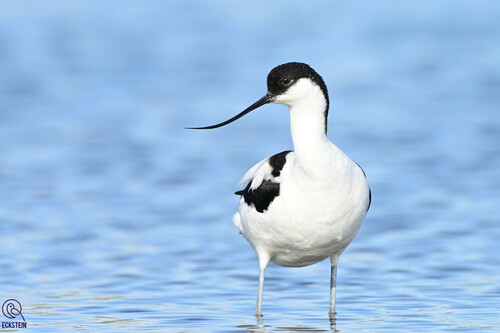
Pied Avocet
Recurvirostra avosetta
With its elegant upturned bill and striking monochrome plumage, the Pied Avocet is a masterpiece of the wetlands. Once a rarity, this resilient wader is now an iconic sight for birders and camera trappers across the coastlines.
Quick Identification
Size
Length: 42-45 cm (16.5-17.7 in); Wingspan: 77-80 cm (30-31.5 in); Weight: 225-400 g (8-14 oz)
Colors
Striking white body with bold black markings on the crown, nape, and wings. Legs are a distinct pale blue-grey.
Key Features
- Long, thin, upwardly curved black bill
- Bold black-and-white 'pied' plumage
- Pale blue-grey legs with partially webbed feet
- Elegant, slender neck and aerodynamic profile
When You’ll See Them
Behavior
The Pied Avocet is a highly social and expressive wader, often seen in loose colonies especially during the breeding season. They are best known for their unique foraging behavior; instead of pecking at the ground, they wade through shallow water and sweep their specialized bills from side to side in a rhythmic 'scything' motion. This allows them to detect and catch tiny aquatic invertebrates through touch rather than sight.
These birds are surprisingly territorial and protective of their nesting sites. When a potential predator approaches, the colony will often coordinate a 'mobbing' defense, flying toward the intruder and emitting loud, shrill 'kluit' calls to drive them away. While they spend much of their time wading, they are also capable swimmers, a trait that distinguishes them from many other long-legged shorebirds. Their interactions with humans are generally cautious, preferring to stay in open areas where they have a clear line of sight to potential threats.
EverydayEarth exclusive
Camera Tips
To capture the Pied Avocet on camera, you must focus on the 'wetland margin'—the shallow transition zone between water and dry land. Position your camera on a low-profile tripod or a specialized ground spike just a few inches above the water level. This low-angle perspective is the secret to professional-looking wildlife photography, as it brings the viewer into the bird's world and beautifully emphasizes that iconic upturned bill. Be sure to check the tide tables if you are in a coastal area; you want the camera positioned so the water reaches it at high tide without submerging the equipment.
Because the Avocet's plumage is a high-contrast mix of pure white and deep black, exposure can be tricky for AI cameras. If your camera has manual settings, try to underexpose slightly to prevent the white feathers from 'blowing out' in bright sunlight. Alternatively, set your camera to face North or South to ensure even lighting throughout the day. Using a 'Burst' or 'Continuous' trigger mode is essential for this species; their scything feeding motion is constant, and you'll want multiple frames to ensure you catch the bill at the perfect point in its sweep or as it emerges from the water with a catch.
While you cannot easily bait Avocets with food, you can attract them to a specific spot by creating a 'scrape'—a small, shallow depression in the mud near the water's edge that mimics their natural nesting or resting spots. If your camera is part of the EverydayEarth network, set your motion sensitivity to 'High' to detect their slender silhouettes against the shimmering water. Since they are sensitive to movement, using a camouflaged housing or tucking the camera into natural reeds is highly recommended. For the best results, aim for the 'golden hours' of dawn and dusk when the low sun reflects off the water, creating a stunning backlighting effect on their wings.
Similar Species
Species that look similar or are commonly confused with Pied Avocet.
Frequently Asked Questions
Record Pied Avocet at your habitat
Connect a camera to start building your own species record — AI identifies every visitor automatically.