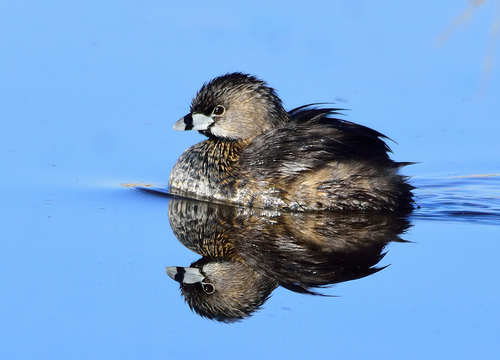
Pied-billed Grebe
Podilymbus podiceps
The 'water witch' of the marsh, the Pied-billed Grebe is a charming, secretive diver known for its incredible ability to sink silently into the water like a submarine.
Quick Identification
Size
Length: 30–38 cm (12–15 in); Wingspan: 45–62 cm (18–24 in); Weight: 250–570 g (8.8–20.1 oz)
Colors
Overall brownish-grey plumage with a darker back. During the breeding season, they feature a whitish bill with a distinct black vertical band and a black throat patch. In winter, the bill becomes plain and the throat turns white.
Key Features
- Thick, chicken-like bill with a dark band in summer
- Blocky head and short, stout neck
- Virtually tail-less appearance with white feathers under the rear
- Often swims low in the water or 'sinks' slowly when alarmed
When You’ll See Them
Geographic range
Where Does the Pied-billed Grebe Live?
The Pied-billed Grebe is native to the Americas, maintaining a massive range that stretches from central Canada through the United States and down into South America as far as Argentina. While northern populations are migratory, moving toward the southern U.S. and Mexico for the winter, populations in the Caribbean and Central America are typically year-round residents.
Basemap © OpenStreetMap contributors
Behavior
The Pied-billed Grebe is a master of stealth on the water. Unlike many ducks that explode into flight when startled, this grebe prefers to sink slowly beneath the surface, often leaving only its eyes and nostrils visible like a tiny submarine. They are highly solitary and territorial, especially during the nesting season, when they build floating platforms of decaying vegetation anchored to reeds.
While they are technically capable of flight, they are rarely seen in the air, requiring a long running start across the water's surface to become airborne. Their social interactions are usually limited to their mate, though they can be quite vocal, producing a series of gulping 'cow-cow-cow' calls that resonate across marshes. They are rarely seen on land because their legs are positioned far back on their bodies, making them excellent swimmers but awkward walkers.
EverydayEarth exclusive
Camera Tips
Capturing a Pied-billed Grebe on a backyard or trail camera requires access to a water feature, ideally a pond or marshy edge. Because these birds rarely leave the water, place your camera on a low-profile stake or floating mount just a few inches above the water line. Aim the lens toward the edges of reed beds or floating vegetation where they prefer to forage and nest. A wide-angle lens is helpful since they often swim close to the shore in search of insects.
Since they are sensitive to movement, ensure your camera is well-camouflaged with local vegetation. They aren't attracted to traditional birdseed, but a healthy ecosystem with plenty of aquatic life is the best lure. If you have a private pond, maintaining a 'wild' edge with cattails or rushes will encourage them to venture into the camera's field of view. They are most active during the early morning hours when the water is calm and insects are emerging.
Use a high shutter speed or a fast-trigger video mode to capture their quick diving actions. Since they can stay submerged for long periods, set your camera to take multiple photos or a longer video clip (20-30 seconds) to increase the chances of seeing them surface. Avoid using bright white flashes at night; while they are primarily diurnal, an infrared flash is less likely to startle them if they are resting near the shore.
Similar Species
Species that look similar or are commonly confused with Pied-billed Grebe.
Frequently Asked Questions
Record Pied-billed Grebe at your habitat
Connect a camera to start building your own species record — AI identifies every visitor automatically.