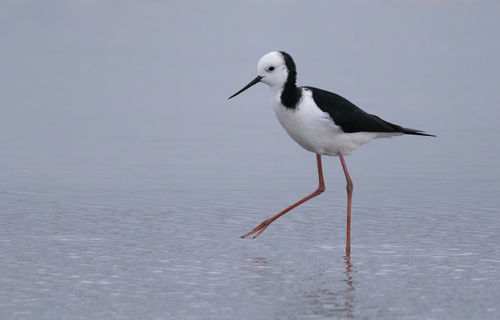
Pied Stilt
Himantopus leucocephalus
With legs that seem to go on forever and a classic black-and-white plumage, the Pied Stilt is the most elegant visitor to our wetlands. Discover how these 'barking' shorebirds bring a touch of wild grace to suburban water edges.
Quick Identification
Size
Length: 33–37 cm (13–14.5 in); Wingspan: 67–85 cm (26–33 in); Weight: 145–220 g (5.1–7.8 oz)
Colors
Crisp white head, neck, and underparts contrasted with jet-black wings and back. Features remarkably long, bright bubblegum-pink legs and a slender black bill.
Key Features
- Extraordinarily long, spindly pink legs
- Fine, needle-like black bill
- Sharp black-and-white 'tuxedo' plumage
- High-pitched barking call reminiscent of a small dog
When You’ll See Them
Behavior
Pied Stilts are the elegant 'supermodels' of the wetland world, easily recognized by their impossible-looking pink legs that trail far behind them in flight. They are highly social birds, often found in small groups or large colonies during the breeding season. They are known for their frantic, high-pitched barking calls, which sound remarkably like a small puppy, especially when they are agitated or defending a nest site from intruders.
When feeding, they use a variety of techniques including daintily pecking at the water's surface, probing deep into the mud, or scything their bill through the water to stir up hidden prey. While they are usually wary of human proximity, they have become increasingly common in suburban wetlands and parklands, where they can be observed from a distance as they navigate shallow waters with a graceful, high-stepping gait.
EverydayEarth exclusive
Camera Tips
To capture the best footage of Pied Stilts, position your camera at the water's edge, aimed toward shallow mudflats or puddles no deeper than 10-15 cm (4-6 inches). Because these birds are quite tall due to their leg length, avoid placing the camera directly on the ground; instead, mount it about 30 cm (1 foot) high and tilt it slightly downward. This ensures you catch both their intricate feeding movements and their full, elegant profile without cutting off their heads or feet at close range.
Since these birds are sensitive to movement, using a camera with a fast trigger speed and a wide-angle lens is ideal. They won't respond to traditional birdseed lures; however, if you are setting up in a backyard with a pond, ensuring the water is clean and has a shallow, sloping 'beach' area will naturally attract them to forage. Time your captures for early morning or late afternoon when the low sun reflects beautifully off the water and illuminates their white plumage against the darker wetland background.
In terms of settings, use a high frame rate (at least 30fps) to capture their quick, pecking motions and the unique way they fold their legs when sitting. During the breeding season, keep an eye out for 'distraction displays' where the birds pretend to have a broken wing to lure predators away from the nest—capturing this behavior on a trail camera is a rare and exciting find. If your camera allows for exposure adjustments, set it to a slightly lower exposure as their bright white feathers can sometimes 'blow out' or lose detail in direct, harsh sunlight.
Similar Species
Species that look similar or are commonly confused with Pied Stilt.
Frequently Asked Questions
Record Pied Stilt at your habitat
Connect a camera to start building your own species record — AI identifies every visitor automatically.