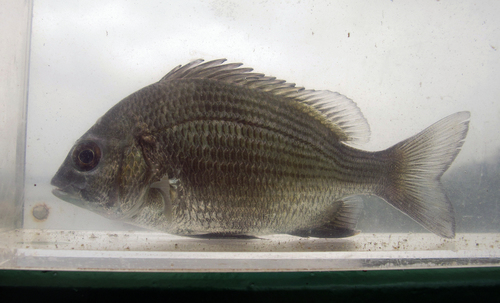
Pikey Bream
Acanthopagrus pacificus
A powerful and resilient inhabitant of northern mangroves, the Pikey Bream is a master of the murky estuarine shadows.
Quick Identification
Size
Typically 30–45 cm (12–18 in) in length, reaching a maximum of 60 cm (24 in); weight typically ranges from 1 to 4 kg (2.2–8.8 lbs).
Colors
Silvery-grey to bronze or charcoal on the back, fading to a lighter silver or white belly; fins are often olive-brown or dusky with darker edges.
Key Features
- Deep, compressed body with a steep head profile
- Strongly developed dorsal and anal fin spines
- Scales have dark edges creating a mesh-like pattern
- Large mouth with thick lips and powerful crushing teeth
When You’ll See Them
Geographic range
Where Does the Pikey Bream Live?
Native to the tropical Indo-West Pacific, the Pikey Bream is most commonly found along the northern coastline of Australia, spanning from the central coast of Western Australia through the Northern Territory to Southern Queensland. Its range extends northwards into the coastal waters and river systems of Papua New Guinea and the Solomon Islands. These fish are specialists of warm, nutrient-rich estuarine environments and are rarely found in the cooler temperate waters of the southern continents.
Basemap © OpenStreetMap contributors
Behavior
The Pikey Bream is a hardy and cautious species, well-adapted to the murky, turbid waters of tropical estuaries. Unlike many other bream species that prefer clear water, the Pikey Bream thrives in low-visibility environments, often lurking near submerged structure such as fallen logs, mangrove roots, and undercut riverbanks. They are known for being exceptionally wary, often retreating to deep cover at the slightest sign of a disturbance.
In social terms, they are frequently found in small groups or schools, particularly during their juvenile stages. As they mature, they become more solitary or move in pairs. They are highly opportunistic feeders, spending much of their time scavenging along the bottom or picking at organisms attached to rocks and timber. While they are not known for long-distance migrations, they do move within estuarine systems according to tidal changes and salinity levels.
EverydayEarth exclusive
Camera Tips
Capturing the Pikey Bream on camera requires an underwater setup, such as a waterproof action camera or a dedicated underwater trail camera. Because these fish live in turbid (cloudy) water, placement is critical. Position your camera within 12 to 24 inches of a known 'snag' or submerged log where the fish are likely to patrol. Using a wide-angle lens is helpful, but keep the camera close to the target area to minimize the amount of suspended sediment between the lens and the fish.
To attract Pikey Bream to your lens, use a mesh bait bag filled with crushed crabs, oily sardines, or mullet. Secure the bait bag directly in the camera's frame, preferably attached to a heavy weight or a dock pylon. The scent trail will draw them out from the mangroves even in low visibility. If you are filming in your backyard tidal creek, try to time your recording for the 'last of the flood' or the 'first of the ebb' tide, as this is when Pikey Bream are most actively foraging against the banks.
Lighting can be a challenge in mangrove environments. If filming during the day, position the camera so the sun is behind it to illuminate the fish. At night, use infrared (IR) LEDs rather than white light; white light can startle these cautious fish and cause them to flee. Set your camera to record short video clips (15-30 seconds) rather than still photos, as the movement helps distinguish the fish from the surrounding murky environment and structure.
Similar Species
Species that look similar or are commonly confused with Pikey Bream.
Frequently Asked Questions
Record Pikey Bream at your habitat
Connect a camera to start building your own species record — AI identifies every visitor automatically.