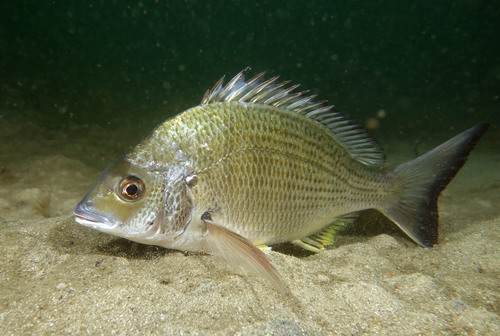
Yellowfin Bream
Acanthopagrus australis
The shimmering silver icon of Australia's east coast, the Yellowfin Bream is a clever scavenger that thrives in both wild estuaries and suburban canals.
Quick Identification
Size
25-35 cm (10-14 inches) average, reaching up to 65 cm (25.6 inches); weight up to 4 kg (8.8 lbs)
Colors
Silvery-bronze body with a white belly; distinctive yellow to golden-colored pelvic and anal fins
Key Features
- Deep, compressed silver-bronze body
- Vibrant yellow or golden ventral and anal fins
- Small dark spot at the base of the pectoral fin
- Strong, sharp dorsal spines and powerful crushing molars
When You’ll See Them
Geographic range
Where Does the Yellowfin Bream Live?
Native to the continent of Oceania, the Yellowfin Bream is a coastal specialist found along the eastern seaboard of Australia. Its core range extends from the tropical waters of Townsville in North Queensland, through New South Wales, and down to the cooler waters of Lakes Entrance in eastern Victoria. This species thrives in the varied salinity of coastal rivers and the high-energy environments of sandy surf beaches.
Basemap © OpenStreetMap contributors
Behavior
These fish exhibit fascinating life cycles, including a reproductive strategy known as protandrous hermaphroditism, where individuals typically mature as males and may transition to females as they grow larger. During the winter months, they form large spawning aggregations near the mouths of estuaries and along surf beaches, moving with the tides to ensure their eggs are carried out to sea. In suburban canals and rivers, they are known to be 'resident' fish, often staying in the same small territory for months at a time if food is abundant.
EverydayEarth exclusive
Camera Tips
Lighting is the biggest challenge when filming Bream. Because their scales are highly reflective, direct sunlight can cause 'blowout' in your images. Position the camera to avoid the direct overhead sun, or use the shadows of a jetty to create a more even light profile. If your camera has AI detection, the silver flash of a Bream's side is a great trigger point. Ensure the water clarity is at its peak, which usually occurs on an incoming high tide when clean ocean water pushes into the estuaries.
To encourage Bream to linger in front of the camera, use a 'chum' or bait bag. A mesh bag filled with crushed oyster shells, fish frames, or even bread can create a scent trail that draws them in. Bream are curious and will often approach the camera to inspect the lens or the bait bag. Set your camera’s frame rate higher if possible, as their movements can be darting and rapid when they are competing with other school members for food. During the winter spawning season, you can often capture massive schools moving in unison—a spectacular sight for any backyard underwater observer.
Similar Species
Species that look similar or are commonly confused with Yellowfin Bream.
Black Bream
Lacks the golden fin color and is more common in the cooler, brackish waters of Victoria and Western Australia.
Tarwhine
Features a more rounded head profile and gold longitudinal lines running along the rows of scales.
Pikey Bream
Much darker in color (often charcoal or dark olive) and found primarily in tropical northern waters.
Frequently Asked Questions
Record Yellowfin Bream at your habitat
Connect a camera to start building your own species record — AI identifies every visitor automatically.