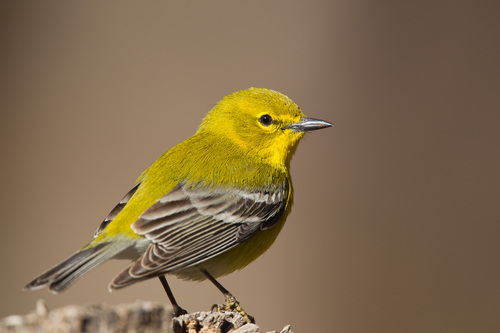
Pine Warbler
Setophaga pinus
The yellow-chested specialist of the pine barrens, this hardy songbird is a frequent visitor to backyard suet feeders. Watch for their steady trill and unique bark-creeping behavior that sets them apart from other wood-warblers.
Quick Identification
Size
Length: 5–5.75 in (12.5–14.5 cm); Wingspan: 7–9 in (18–23 cm); Weight: 0.3–0.5 oz (9–15 g)
Colors
Adult males are olive-yellow above with a bright yellow throat and breast; females and immatures are duller olive-brown with paler yellow or white underparts. Both sexes feature two prominent white wing bars.
Key Features
- Two white wing bars on dark wings
- Blurry olive-to-black streaks on the sides of the chest
- Relatively heavy, notched bill for a warbler
- Broken yellow eye-ring and a dark line through the eye
When You’ll See Them
Behavior
The Pine Warbler is a bit of an outlier in the warbler family. While most of its relatives are frantic, high-energy foragers that flit between leaves, the Pine Warbler often moves with a more deliberate pace. They are frequently seen creeping along the thick trunks and heavy limbs of pine trees, probing the bark for insects in a manner reminiscent of a nuthatch or a creeper. This species is quite social during the winter months, often joining 'foraging guilds' alongside Chickadees, Tufted Titmice, and Kinglets to search for food.
In a backyard setting, they are one of the few warblers that will regularly visit bird feeders. They are less timid than other wood-warblers and can become quite accustomed to human activity, provided there are mature pine trees nearby to serve as a retreat. Their song is a steady, musical trill that can be heard even on unseasonably warm winter days in the South, making them a cheerful presence year-round.
EverydayEarth exclusive
Camera Tips
To capture high-quality footage of a Pine Warbler, focus your efforts on suet feeders. Unlike most other warblers that strictly hunt live insects, Pine Warblers are suckers for high-fat suet, especially during the colder months. Position your camera about 12 to 18 inches away from a suet cage, ideally mounted on the trunk of a pine tree or a sturdy 4x4 post. Because these birds are comfortable foraging on vertical surfaces, a 'tail-prop' suet feeder is an excellent choice for getting them to hold a photogenic pose.
Water features are your second best bet for a great shot. Pine Warblers are canopy dwellers and often descend to ground level only to drink or bathe. A birdbath with a 'dripper' or a small moving fountain will act as a beacon for them. Place your camera at a low angle, roughly 2-3 feet from the water's edge, and use a fast shutter speed or high-frame-rate video setting (60fps or higher) to freeze the action as they splash.
In terms of lighting and timing, these birds are most active in the early morning as they replenish energy lost overnight. Try to position your camera facing north or south to avoid the harsh backlighting of the rising sun. If you are using a trigger-based camera, set the sensitivity to 'High' because these birds are small and can move quickly. During the spring breeding season, you can also catch them gathering nesting material, so keep an eye out for them picking up pine needles or spider silk near the base of trees.
Similar Species
Species that look similar or are commonly confused with Pine Warbler.
Yellow-throated Warbler
Has a striking black-and-white face pattern and a pure white belly, whereas the Pine Warbler is more olive-yellow overall.
American Goldfinch
Has a much thicker, conical seed-eating bill and lacks the blurry side-streaking found on the Pine Warbler.
Yellow-rumped Warbler
Features a bright yellow patch on the rump and sides, and usually has more contrasting gray/black markings than the olive-toned Pine Warbler.
Frequently Asked Questions
Record Pine Warbler at your habitat
Connect a camera to start building your own species record — AI identifies every visitor automatically.