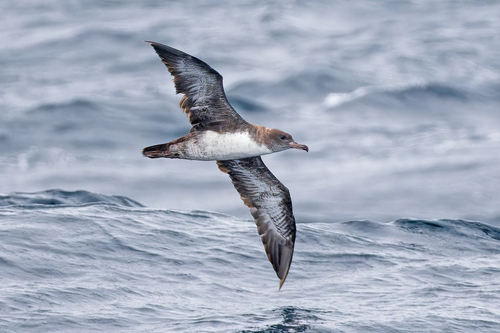
Pink-footed Shearwater
Ardenna creatopus
A champion of the Pacific, the Pink-footed Shearwater is a majestic long-distance migrant that glides effortlessly over the ocean waves. Easily identified by its namesake pink bill and mottled plumage, this bird is a true icon of the open sea.
Quick Identification
Size
Length: 48 cm (19 in); Wingspan: 109 cm (43 in); Weight: 700–800 g (1.5–1.7 lbs)
Colors
Mottled grayish-brown upperparts; white to dusky-gray underparts; distinctive pink bill with a black tip; pink legs and feet.
Key Features
- Heavy pink bill with a dark tip
- Mottled grayish-brown plumage on the back and head
- Large, stocky build with broad wings
- White underwings with dark bordering
When You’ll See Them
Behavior
During the breeding season, they return to small islands off the coast of Chile to nest in underground burrows. However, for the rest of the year, they are tireless travelers, migrating as far north as Alaska. While they are graceful in the air, they are famously awkward on land, using their wings to help 'shuffle' along the ground toward their nests. They are generally indifferent to humans but are frequently seen by coastal observers following fishing vessels to scavenge for discarded catch.
EverydayEarth exclusive
Camera Tips
Capturing a Pink-footed Shearwater on a trail or backyard camera requires a specialized setup because these birds rarely, if ever, set foot on mainland soil. If you are a coastal resident with a view of the Pacific Ocean, the best strategy is to mount your camera on a high vantage point, such as a balcony or a cliff-side post, overlooking the water. Aim your camera toward the horizon or toward known 'hotspots' like kelp forests or areas where the continental shelf drops off, as these are natural corridors for migrating shearwaters.
Because these birds are fast-moving gliders, standard motion triggers can struggle to keep up. Use a camera with a high-speed trigger (0.2 seconds or less) or set your device to 'Time Lapse' mode during peak migration months (May through September). This ensures you capture the horizon every few seconds regardless of movement. If your camera allows for manual exposure, slightly underexpose the image (-1.0 EV). The bright ocean surface can often cause the camera to overexpose, which washes out the critical details of the bird’s white underbelly and pink bill.
While you cannot lure these birds with a traditional bird feeder, you can use environmental cues to know when to check your cameras. Look for 'bait balls' or intense gull activity on the water; Pink-footed Shearwaters often join these feeding frenzies. If you have a weather-sealed camera, days with strong onshore winds are your best opportunity. These winds push pelagic species closer to the shore, bringing them within the range of high-quality telephoto trail cams.
Finally, protect your equipment from the elements. Salt spray is the primary enemy of coastal camera setups. Use a protective housing and regularly clean the lens with a microfiber cloth and fresh water to prevent salt crusting, which will blur your images. For the best clarity, set your camera to record at the highest possible resolution (4K if available) to allow for digital cropping later, as the birds may still appear small in the frame even when relatively close to shore.
Similar Species
Species that look similar or are commonly confused with Pink-footed Shearwater.
Flesh-footed Shearwater
Has a similar pink bill but features entirely dark chocolate-brown plumage instead of a white belly.
Sooty Shearwater
Much darker overall with silvery patches under the wings and a dark bill.
Buller's Shearwater
Features a cleaner white belly and a very distinct dark 'M' pattern across the upper wings and back.
Frequently Asked Questions
Record Pink-footed Shearwater at your habitat
Connect a camera to start building your own species record — AI identifies every visitor automatically.