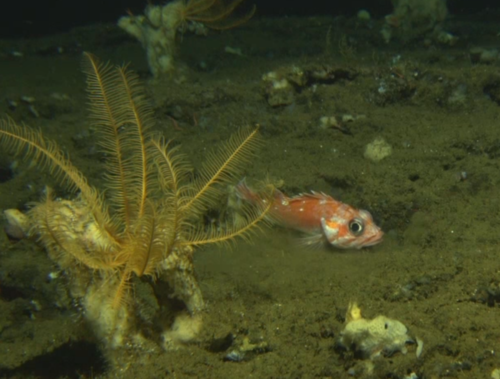
Pinkrose Rockfish
Sebastes simulator
A hidden gem of the deep Pacific, the Pinkrose Rockfish is a master of camouflage among the colorful reefs of the California coast. Its vibrant rosy hues and mysterious white spots make it one of the most striking finds for deep-sea underwater explorers.
Quick Identification
Size
Reaches up to 30 cm (12 inches) in length; weight is typically under 1 kg (2.2 lbs)
Colors
Bright pink to reddish-orange body; two to four distinct white or light pink spots along the base of the dorsal fin; lighter underside
Key Features
- Deep-bodied, compressed profile
- Large eyes characteristic of deep-water species
- Prominent spines on the head and dorsal fin
- Four white spots on the back
When You’ll See Them
Geographic range
Where Does the Pinkrose Rockfish Live?
The Pinkrose Rockfish is native to the Eastern Pacific Ocean along the coast of North America. Its primary range stretches from central California in the United States down to the southern tip of Baja California, Mexico. They are most commonly observed in the deep, cold waters surrounding the Channel Islands and offshore submerged banks.
Basemap © OpenStreetMap contributors
Behavior
The Pinkrose Rockfish is a deep-water specialist that spends most of its life hovering near rocky substrates. Unlike some of its more gregarious relatives, this species is often found solitary or in very small groups, tucked into crevices or resting near the seafloor. They are relatively sedentary, showing high site fidelity to specific reef structures where they can find both shelter and hunting opportunities.
As an ambush predator, its behavior is characterized by patience. It remains nearly motionless, blending into the colorful sponge and coral growth of the deep reef, before lunging at small prey. Because they live at significant depths, they have little interaction with humans outside of deep-sea research or specialized recreational fishing, making them a rare and prized sight for underwater observers.
EverydayEarth exclusive
Camera Tips
Capturing the Pinkrose Rockfish requires specialized equipment because of their extreme depth. For those with access to deep-water drop cameras or ROVs (Remotely Operated Vehicles), focus your efforts on high-relief rocky structures. Look for areas where the seafloor transitions from sand to rock, as these 'edges' are hotspots for rockfish activity. Use a sturdy, weighted housing capable of withstanding at least 50 atmospheres of pressure.
Lighting is the most critical factor at these depths where sunlight barely penetrates. While white light provides the best color for identification, it can startle some fish. Consider using red-tinted LED arrays, which are less visible to many deep-sea species, allowing you to observe their natural, undisturbed behavior. If using bait to lure them into frame, a perforated canister filled with chopped squid or oily fish like mackerel works best, as the scent will travel through the current.
Set your camera to a high frame rate if possible, as rockfish can move surprisingly fast when they strike at prey. Ensure your camera is angled slightly downward toward the rocky crevices, as Pinkrose Rockfish prefer to stay close to the protection of the reef. If you are using a stationary drop-cam, leave it in place for at least 30 to 60 minutes to allow the local residents to become accustomed to its presence and return to the area after the initial disturbance of the deployment.
Similar Species
Species that look similar or are commonly confused with Pinkrose Rockfish.
Frequently Asked Questions
Record Pinkrose Rockfish at your habitat
Connect a camera to start building your own species record — AI identifies every visitor automatically.