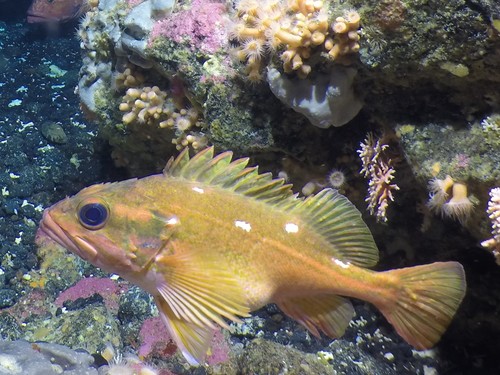
Rosethorn Rockfish
Sebastes helvomaculatus
A gem of the deep Pacific, the Rosethorn Rockfish is famous for its striking pink hues and mysterious white markings. Found along the rocky seafloor from Alaska to Mexico, these resilient fish are a masterclass in deep-sea survival.
Quick Identification
Size
Maximum length of 41 cm (16 inches); typically weighs between 0.5 to 1.5 kg (1-3 lbs).
Colors
Bright pinkish-red to orange-yellow body; distinguished by 4-5 prominent white or pale green blotches along the back near the base of the dorsal fin.
Key Features
- 4-5 white to greenish-white blotches on the back
- Pinkish-orange base color with yellow highlights
- Large, prominent eyes typical of deep-water species
- Venomous spines on the dorsal and anal fins
- Relatively slender body compared to other rockfish
When You’ll See Them
Geographic range
Where Does the Rosethorn Rockfish Live?
Native to the temperate waters of the Eastern Pacific Ocean, the Rosethorn Rockfish occupies a vast stretch of the North American coastline. Its core range extends from the Gulf of Alaska near Kodiak Island down through the coastal waters of British Columbia and the Pacific Northwest, reaching as far south as the northern regions of Baja California, Mexico. While they are widely distributed, they are most concentrated in the nutrient-rich upwelling zones off the coasts of Oregon and Northern California.
Basemap © OpenStreetMap contributors
Behavior
The Rosethorn Rockfish is a relatively sedentary and solitary species, often found hovering just inches above the seafloor or resting directly on rocky ledges. Unlike some of their more social cousins that form massive schools, Rosethorns prefer a more independent lifestyle, claiming small territories within deep-water reef systems. They are "sit-and-wait" predators, using their excellent low-light vision to spot prey before making a quick, lunging strike.
Because they live at significant depths, their interaction with humans is primarily limited to scientific surveys and deep-sea fishing. They are long-lived, like many members of the Sebastes genus, potentially living for several decades. When threatened, they flare their venomous dorsal spines as a deterrent to larger predators like lingcod or seals. In the presence of underwater ROVs or cameras, they tend to remain calm, often staring curiously at the lens rather than darting away.
EverydayEarth exclusive
Camera Tips
Capturing the Rosethorn Rockfish requires a specialized approach since they reside far deeper than standard backyard ponds. For those living along the Pacific coast, the best way to "see" these fish is via a tethered drop-camera or a mini-ROV (Remotely Operated Vehicle). Focus your efforts on the continental shelf, specifically looking for areas with "rugged" bathymetry—underwater cliffs, rock piles, or areas where the sonar shows significant vertical relief. These fish love structure and are rarely found on flat, sandy plains.
Lighting is your biggest challenge at depths exceeding 100 feet where red light is absorbed by the water. To capture the Rosethorn’s brilliant pink and orange hues, you must use high-intensity underwater LEDs with a high Color Rendering Index (CRI). Without artificial light, the fish will appear a dull grey or muddy green on camera. Position your lights at an angle to the camera lens rather than directly behind it; this reduces "backscatter," which is the reflection of light off of plankton and marine snow that can blur your image.
Since Rosethorn Rockfish are ambush predators, they are highly attracted to movement and scent. You can effectively "bait" your camera station by attaching a small mesh bag of chopped herring or squid to a weighted line near the camera. This won't just bring the Rosethorn into view; it will encourage them to hold a position in front of the lens for several minutes. Set your camera to a high frame rate (60fps) if possible, as their strikes at prey are incredibly fast, even if their general swimming speed is slow and methodical.
Similar Species
Species that look similar or are commonly confused with Rosethorn Rockfish.
Rosy Rockfish
The Rosy Rockfish has purple borders around its white spots, whereas the Rosethorn's spots are plain white or greenish.
Swordspine Rockfish
Features much longer and more prominent spines in the anal fin and generally lacks the distinct white blotches of the Rosethorn.
Starry Rockfish
Covered in dozens of tiny white specks resembling stars, rather than just 4-5 large blotches.
Frequently Asked Questions
Record Rosethorn Rockfish at your habitat
Connect a camera to start building your own species record — AI identifies every visitor automatically.