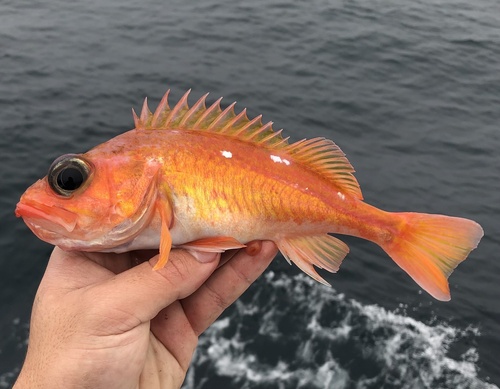
Swordspine Rockfish
Sebastes ensifer
Hiding in the deep, rocky crevices of the Pacific, the Swordspine Rockfish is a master of camouflage known for its impressive, sword-like spine.
Quick Identification
Size
A small rockfish reaching a maximum length of 30 cm (12 inches) and weighing up to 0.8 kg (1.7 lbs).
Colors
Body is primarily reddish-pink to orange-tan with dark greenish-brown mottling or vermiculations on the back; the fins often show a yellowish hue.
Key Features
- Exceptionally long second anal spine extending past the third
- Reddish body with distinct dark green or brown wavy patterns
- Large, prominent eyes adapted for deep-water light
- Small, slender body compared to other Sebastes species
When You’ll See Them
Geographic range
Where Does the Swordspine Rockfish Live?
This marine species is native to the temperate waters of the Northeastern Pacific Ocean. Its range is concentrated along the western coast of North America, stretching from San Francisco, California, in the United States, down to central Baja California, Mexico, including regions around Guadalupe Island. They are most commonly found in the deep, cold waters of the Southern California Bight.
Basemap © OpenStreetMap contributors
Behavior
The Swordspine Rockfish is a relatively sedentary and solitary species that spends most of its time hovering near the protection of rocky reefs and deep-water structures. Unlike more pelagic fish, they are closely associated with the benthos, often resting on the seafloor or tucked into crevices to avoid larger predators. They are ambush hunters, utilizing their mottled coloration to blend into the shadows of the complex reef environment.
Socially, they are not known to form large schools, though several individuals may congregate in areas with high-quality habitat or abundant food sources. Because they live at significant depths, their behavior is primarily dictated by the availability of prey and the slow metabolism typical of deep-water Pacific rockfish. They are long-lived and slow-growing, reaching maturity at several years of age.
EverydayEarth exclusive
Camera Tips
Capturing the Swordspine Rockfish requires moving your "backyard" exploration into the deep ocean. Because this species lives at depths ranging from 70 to over 400 meters, you will need specialized underwater equipment such as a Remotely Operated Vehicle (ROV) or a deep-water drop camera system. Standard action cameras in waterproof housings are generally not rated for the crushing pressures found in Swordspine habitat, so ensure your equipment is rated for at least 500 meters.
To successfully film these fish, target high-relief rocky areas or the edges of submarine canyons. The Swordspine Rockfish loves structure; look for crevices and overhangs where they can hide from the current. Use powerful external LED lights, as colors like red are filtered out by the water column very quickly. Since these fish are relatively small and stationary, a macro-capable lens or a narrow field of view can help capture the fine details of their green mottling and their namesake anal spine.
Using a bait lure is highly effective for this species. A small mesh bag filled with chopped squid or oily fish like mackerel can be attached within the camera's field of view. The scent will travel through the current, drawing the Swordspine out of its rocky fortress. Set your camera to record in high-definition video at 60fps; while the fish doesn't move fast, the high frame rate allows you to see the delicate undulating movements of its fins as it stabilizes itself in the deep-sea currents.
Similar Species
Species that look similar or are commonly confused with Swordspine Rockfish.
Frequently Asked Questions
Record Swordspine Rockfish at your habitat
Connect a camera to start building your own species record — AI identifies every visitor automatically.