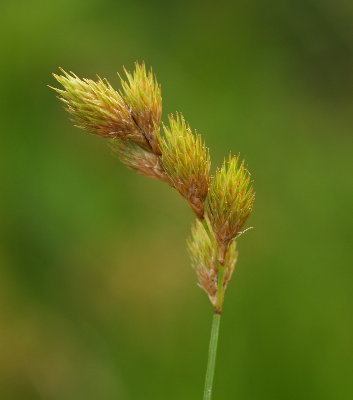
pointed broom sedge
Carex scoparia
A staple of North American wetlands, the pointed broom sedge features distinctive prickly seed heads and vibrant green clumps. It is a critical host plant for pollinators and a structural beauty for any backyard rain garden.
Quick Identification
Size
Stems typically reach 12-36 inches (30-90 cm) in height; clumps spread 12-18 inches (30-45 cm) wide.
Colors
Bright green foliage; seed heads start as pale green, maturing to a golden tan or deep chocolate brown.
Key Features
- Triangular stems (sedges have edges)
- Densely clustered, cone-shaped flower spikes at the stem tips
- Pointed, scale-like perigynia that give the seed head a 'prickly' appearance
- Clump-forming (cespitose) growth habit without runners
When You’ll See Them
Behavior
Pointed broom sedge is a perennial wetland plant that plays a vital role in local ecosystems by stabilizing soil and providing cover. Unlike many invasive grasses, this sedge grows in neat, dense clumps, making it an excellent choice for rain gardens and pond edges. It is a 'pioneer species,' often being one of the first plants to colonize disturbed wet soil, effectively preventing erosion with its fibrous root system.
While it doesn't move in the traditional sense, it interacts dynamically with its environment. During the spring, it sends up vibrant green shoots that serve as a host for various butterfly larvae. By mid-summer, the heavy seed heads bow the stems slightly, creating a dense canopy that provides a cool, moist microclimate for frogs, salamanders, and small invertebrates. It is a resilient plant that can handle seasonal flooding and even temporary droughts once established.
EverydayEarth exclusive
Camera Tips
Capturing pointed broom sedge on camera requires a different strategy than mobile wildlife. To showcase its growth, set up a time-lapse sequence during the late spring. Place your camera on a steady tripod or a low-profile stake about 12-18 inches from the ground, angled slightly upward. This perspective emphasizes the 'broom-like' clusters against the sky and helps highlight the unique triangular cross-section of the stems.
Because this plant thrives in wet areas, it is a magnet for other wildlife. Position your camera to face a clump of sedge near a water source to capture 'action' shots of frogs seeking shade or songbirds like Swamp Sparrows foraging for seeds in late summer. Use a macro lens or a camera with a short focal length to capture the intricate details of the pointed perigynia; these features are best photographed in the soft 'golden hour' light of early morning or late afternoon when the sun highlights the translucent edges of the seed heads.
For the best results with AI-powered cameras, ensure the area around the sedge is clear of distracting tall weeds that might trigger false motion alerts in the wind. Setting your camera to a higher shutter speed is essential if you want to capture the plant swaying in the breeze without blurring. In the winter, don't remove the camera; the dried brown stalks create beautiful architectural silhouettes against the snow and often attract hungry winter birds looking for leftover seeds.
Similar Species
Species that look similar or are commonly confused with pointed broom sedge.
Frequently Asked Questions
Record pointed broom sedge at your habitat
Connect a camera to start building your own species record — AI identifies every visitor automatically.