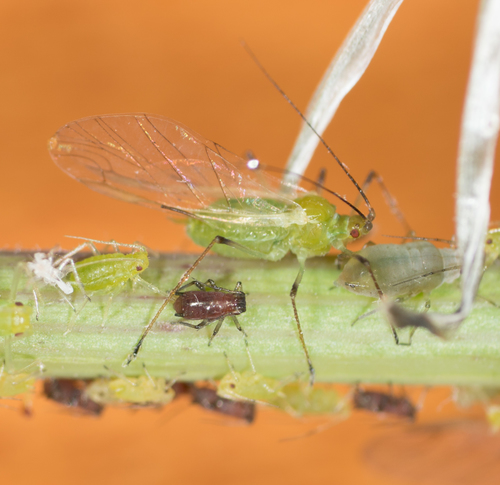
Potato Aphid
Macrosiphum euphorbiae
A tiny titan of the vegetable garden, the Potato Aphid is a master of disguise and survival. Whether appearing in vibrant green or soft pink, these remarkable insects offer a fascinating look at the complex micro-ecosystems thriving right under our leaves.
Quick Identification
Size
2.5 to 4 mm (0.1 to 0.16 inches) in length
Colors
Pale green or yellowish-green; some individuals are pink or reddish-pink; antennae and legs often have darker tips
Key Features
- Long, slender siphunculi (tail pipes) with dark tips
- Spindle-shaped, elongated body
- Prominent antennal tubercles that point outward
- Antennae that are longer than the body itself
When You’ll See Them
Behavior
The Potato Aphid is a highly adaptable sap-sucker that exists in two distinct color forms: green and pink. These colors aren't related to sex or age but are often found together within the same colony. They are more mobile than many other aphid species; when they sense the shadow of a predator or a sudden vibration, they will frequently drop off the leaf entirely to escape. They spend their spring and summer reproducing asexually, allowing populations to explode rapidly on host plants like tomatoes and potatoes.
These insects are famous for their symbiotic relationships. As they feed on plant phloem, they excrete a sugary waste known as honeydew. Backyard observers will often see ants patrolling the aphid colonies, acting as 'bodyguards' against ladybugs and lacewings in exchange for this sweet liquid. In the fall, they produce a generation of winged individuals that migrate to rose bushes to lay overwintering eggs, completing a complex migratory lifecycle.
EverydayEarth exclusive
Camera Tips
Capturing the Potato Aphid requires a specialized approach because of their minute size. To get clear shots, you should use a camera with macro capabilities or a dedicated macro lens with at least a 1:1 magnification ratio. If you are using a standard backyard trail camera, look for one with a 'macro mode' or a close-focusing distance of less than 10 inches. Position the camera on a small tripod or stake very close to the underside of leaves on 'sentinel' plants like roses (in early spring) or tomato plants (in mid-summer). These are their preferred congregating spots.
Lighting is your best friend when filming these translucent insects. Try to position your camera so that the sun is behind the leaf. This 'backlighting' effect makes the aphids' bodies glow, highlighting their internal structures and making them pop against the green background. If your camera allows for external triggers, setting up a small LED light at a 45-degree angle can reveal the texture of their skin and the fine hairs on their legs. Avoid using a direct front flash, as it will likely wash out their delicate colors and create harsh reflections on the leaf surface.
Because these insects are so light, even a gentle breeze can cause a leaf to bounce out of focus. To capture steady footage, use a 'plamp' (plant clamp) or a simple garden stake to stabilize the specific stem or leaf you are monitoring. This ensures the colony stays within your narrow depth of field. Setting your camera to a high frame rate (60fps or higher) is also recommended; this allows you to slow down the footage in post-production, which is the best way to see them move their siphunculi or watch an ant 'milk' them for honeydew.
Finally, monitor the health of your garden to know when to deploy your gear. Look for 'leaf curling' or the presence of ants climbing up and down a stem—these are surefire indicators that a Potato Aphid colony is thriving nearby. Early morning is the best time for photography, as the insects are less active in the cooler temperatures and the dew can add a beautiful, crystalline aesthetic to your shots. Use a narrow aperture (f/8 to f/11) to maximize the amount of the aphid that stays in focus.
Similar Species
Species that look similar or are commonly confused with Potato Aphid.
Frequently Asked Questions
Record Potato Aphid at your habitat
Connect a camera to start building your own species record — AI identifies every visitor automatically.