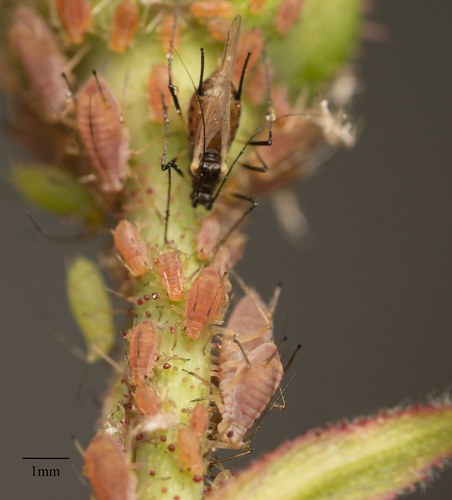
Rose Aphid
Macrosiphum rosae
The Rose Aphid is a tiny, fascinating marvel of the garden, turning rosebuds into bustling miniature ecosystems. Discover the hidden world of these colorful sap-suckers and the complex food webs they support.
Quick Identification
Size
1.7 to 3.6 mm (0.07 to 0.14 inches) in length
Colors
Occurs in two distinct color morphs: vibrant lime green or soft candy-pink; both feature long, prominent black siphunculi (tail pipes).
Key Features
- Pear-shaped, soft body with long legs
- Distinctly long, dark black siphunculi at the rear
- Antennae nearly as long as the body
- Found in dense clusters on rose buds and tender new stems
When You’ll See Them
Behavior
Rose Aphids are the quintessential garden specialists, famous for their ability to seemingly appear out of nowhere as soon as roses begin to bud. They are remarkable for their reproductive strategy; during the spring and summer, females give birth to live young through parthenogenesis. This means they don't need to mate to produce offspring, allowing a single 'foundress' to create a massive colony in just a few weeks. These colonies are almost entirely female until the autumn when winged males are produced to facilitate egg-laying for the winter.
While often viewed as a nuisance by gardeners, Rose Aphids are a foundational part of the backyard food web. They excrete a sugary substance called honeydew, which is a prized food source for ants. In exchange for this 'nectar,' ants will often act as bodyguards, protecting the aphids from predators like ladybugs and lacewings. When threatened, Rose Aphids can perform a synchronized 'shaking' dance or drop off the plant entirely to escape a hungry predator.
EverydayEarth exclusive
Camera Tips
Capturing the Rose Aphid requires a specialized approach because of their minuscule size. Standard trail cameras usually have a minimum focus distance that is too far for these insects. To get a clear shot, you should use a camera with a dedicated macro mode or attach a mobile macro lens to your AI-powered backyard camera. Position your lens within 2 to 5 inches of a rose bud that is just starting to show color, as this is where the aphids congregate in the highest numbers.
Lighting is the most important factor when documenting micro-wildlife. Rose Aphids can look translucent or washed out in direct, harsh midday sun. For the best detail, use a diffuser or wait for a bright but slightly overcast day. This will allow the camera to capture the subtle textures of their bodies and the contrast of their black siphunculi against their green or pink skin. If your camera allows for manual focus, lock it on the edge of a rose sepal where the aphids are most likely to cluster.
To truly capture the 'drama' of the aphid world, use a time-lapse setting. Setting your camera to take a high-resolution photo every 30 to 60 seconds over a four-hour window can reveal amazing behaviors, such as the birth of a nymph or the 'milking' process by visiting ants. Look for 'hot spots' on your rose bushes—usually the fastest-growing vertical shoots—and ensure your camera is securely mounted to a stake or tripod, as even a tiny vibration will cause a macro shot to blur.
Similar Species
Species that look similar or are commonly confused with Rose Aphid.
Frequently Asked Questions
Record Rose Aphid at your habitat
Connect a camera to start building your own species record — AI identifies every visitor automatically.