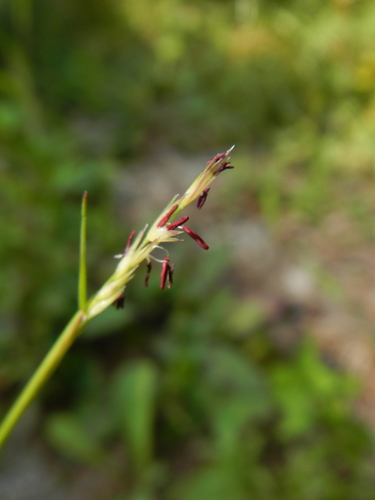
poverty dropseed
Sporobolus vaginiflorus
A master of resilience, poverty dropseed thrives where few other plants dare to grow, turning dry, compacted soil into a delicate display of wiry stems. This native North American grass is a silent staple of suburban paths and wild glades alike.
Quick Identification
Size
20–60 cm (8–24 inches) tall; tufted with slender, wiry stems
Colors
Light green to gray-green during growth; matures to a straw-tan or reddish-purple hue in autumn
Key Features
- Seed heads (panicles) often remain partially or fully enclosed in swollen leaf sheaths
- Slender, wiry stems that often branch from the base
- Forms small, distinct tufts rather than a thick sod
- Thrives in high-traffic or poor, rocky soil where other plants fail
When You’ll See Them
Geographic range
Where Does the poverty dropseed Live?
Native to the vast landscapes of North America, poverty dropseed is a hardy pioneer found from the southern provinces of Canada across nearly the entire United States and into parts of northern Mexico. It is especially common in the Midwest and Eastern states, where it stakes a claim in rocky glades and along the sun-drenched margins of roads. This species has successfully adapted to human-altered environments, often appearing as one of the few green things growing in the cracks of urban pavement or along heavily salted highways.
Basemap © OpenStreetMap contributors
Behavior
Poverty dropseed is a remarkably resilient annual grass that has earned its name by thriving in "poverty-stricken" soils—areas that are too dry, rocky, or compacted for more sensitive species. Unlike many grasses that display their flowers prominently, this species often utilizes cleistogamy, meaning its flowers can self-pollinate without ever opening, safely tucked away inside the protective leaf sheaths. This strategy ensures seed production even during harsh weather or in high-disturbance environments.
In suburban settings, this grass often acts as a pioneer species, colonizing the very edges of asphalt driveways, gravel paths, and salted roadsides. It grows in a decumbent to erect fashion, often spreading outward in a tufted pattern. While it may go unnoticed during the spring and summer due to its slender profile, it becomes much more visible in the late autumn when the entire plant takes on a bleached, straw-like appearance that persists through the early winter.
EverydayEarth exclusive
Camera Tips
Capturing the subtle beauty of poverty dropseed requires a different approach than filming mobile wildlife. To get the best results on your backyard or trail camera, set the device to macro mode or use a camera with a short focal length. Because this grass is low-growing, mount your camera just a few inches off the ground using a specialized stake or a flat stone. This perspective captures the intricate structure of the leaf sheaths where the seeds are hidden.
Timing is everything for this species. Set your camera to time-lapse mode during the late summer and early autumn. By taking one photo every hour, you can create a stunning visual record of the plant’s transition from a subtle green to its characteristic autumn straw-gold. This period is also when the seeds "drop," giving you a chance to see the plant's namesake behavior in action during windy days.
Lighting is your best friend when photographing wiry grasses. Position your camera so that the plant is backlit by the early morning or late afternoon sun. This "rim lighting" will make the thin stems and hairs on the sheaths glow, making the plant pop against a darker background. If you are using a camera with motion sensors, be aware that high winds may trigger the camera constantly; consider lowering the sensitivity or using a timer-based capture instead.
Don't forget the wildlife connection. Poverty dropseed is a food source for several small granivorous birds like sparrows and juncos. If you place your camera near a healthy patch of dropseed in October or November, you are likely to capture these birds foraging on the ground. Use a high-frame-rate video setting to capture the quick, twitchy movements of the birds as they extract seeds from the sheaths.
Similar Species
Species that look similar or are commonly confused with poverty dropseed.
Frequently Asked Questions
Record poverty dropseed at your habitat
Connect a camera to start building your own species record — AI identifies every visitor automatically.