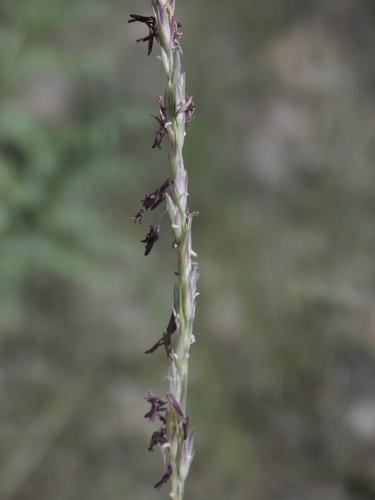
Tall Dropseed
Sporobolus compositus
A resilient native of the American prairie, Tall Dropseed provides a striking vertical silhouette and a vital winter food source for backyard birds. Its elegant stalks transition from summer greens to a ghostly winter white, swaying gracefully in the wind.
Quick Identification
Size
2 to 4 feet (0.6 to 1.2 meters) tall; leaves reach up to 12 inches (30 cm) in length
Colors
Light green to grayish-green during the growing season; transitions to straw-tan or bleached silvery-white in winter
Key Features
- Slender, upright bunchgrass growth habit
- Dense, spike-like flowering heads (panicles) often partially hidden in leaf sheaths
- Leaves taper to thin, thread-like curling tips
- Small, rounded seeds that drop easily when mature
When You’ll See Them
Geographic range
Where Does the Tall Dropseed Live?
Tall Dropseed is a widespread native of North America, occurring across the vast majority of the United States from the Atlantic coast to the Rocky Mountains. It is most abundantly found throughout the Great Plains and the Midwestern prairie states, but its range extends north into southern Canada and reaches southward into the interior of northern Mexico. This hardy grass thrives in open, sunny environments where competition from taller woodland species is limited.
Basemap © OpenStreetMap contributors
Behavior
As autumn approaches, the plant enters its most ecologically active phase for wildlife. It earns its name from the way its small, nutritious seeds 'drop' from the hulls upon ripening, creating a buffet for ground-foraging birds. In the winter months, the plant does not collapse; instead, it turns a striking bleached-white color and maintains its vertical structure, providing essential cover and a windbreak for small animals during the harshest weather.
EverydayEarth exclusive
Camera Tips
To capture the best footage of wildlife interacting with Tall Dropseed, place your AI-powered camera on a short tripod or ground mount, approximately 12 to 15 inches high. This low-angle perspective allows you to see small songbirds like Dark-eyed Juncos and Field Sparrows as they forage for seeds at the base of the grass clumps. If your camera has a macro or close-focus mode, aim it specifically at the seed heads in early autumn to witness the intricate way birds extract the tiny grains.
Lighting is the most critical factor for photographing this species. Position your camera so it faces east or west to take advantage of backlighting during the 'golden hours.' The slender, translucent stalks and the bleached winter foliage of Tall Dropseed catch the low sun beautifully, creating a glowing effect that highlights the texture of the grass. This high-contrast lighting also helps the AI better distinguish the movement of birds among the swaying blades.
In winter, do not remove the camera or cut back the grass. The standing stalks are a magnet for wintering birds when other food sources are buried under snow. Set your camera's motion sensitivity to a medium-high level; while the wind will cause the grass to sway, this higher sensitivity is necessary to trigger the shutter for the light, fast movements of small finches and sparrows. If using a trail camera, a 3-shot burst mode is ideal for capturing the rapid action of a bird landing on a stalk to feed.
Similar Species
Species that look similar or are commonly confused with Tall Dropseed.
Frequently Asked Questions
Record Tall Dropseed at your habitat
Connect a camera to start building your own species record — AI identifies every visitor automatically.