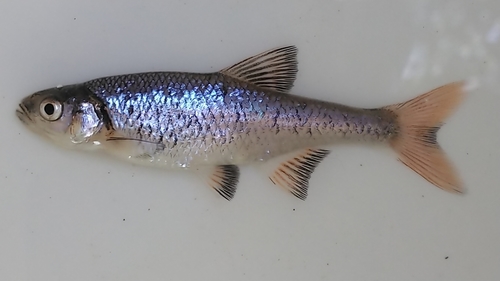
Pretty Shiner
Lythrurus bellus
A hidden jewel of the Deep South's freshwater streams, the Pretty Shiner transforms from a subtle silver minnow into a fiery display of red and orange during the spring. This active schooling fish is a master of the creek's middle currents, bringing life and color to sandy-bottomed pools.
Quick Identification
Size
2 to 3.5 inches (5 to 9 cm) in length
Colors
Silvery-blue body with a prominent dark spot at the base of the dorsal fin; breeding males develop vivid red or orange fins and a rosy flush on the body.
Key Features
- Dark wedge-shaped spot at the front base of the dorsal fin
- Slender, compressed silvery body
- Breeding males display intense red-orange fin pigmentation
- Large, high-set eyes for surface feeding
When You’ll See Them
Behavior
These fish are sensitive to their environment and serve as excellent indicators of water quality. They are often found in 'mixed-species associations,' meaning they school alongside other minnows and daces for protection against predators like bass and herons. For the backyard observer with a creek on their property, they offer a fascinating look at the complex social lives of freshwater residents.
EverydayEarth exclusive
Camera Tips
Lighting is the most critical factor for success. Try to position your camera in a spot where the sun hits the water directly between 11 AM and 2 PM; this sunlight will penetrate the surface and make the shiners' iridescent scales 'pop' against the darker creek bottom. If you are filming during the spring breeding season, try to find a spot with a bit of gravel or rocky debris, as males often congregate here to display their brilliant red colors to passing females.
While many people use bait to attract wildlife, the best way to lure Pretty Shiners is to naturally stimulate their foraging instinct. Gently kick up the sand or gravel a few feet upstream of your camera. This releases 'benthic macroinvertebrates' (tiny bugs) into the current, which will drift past your lens and draw the school right into the frame. Avoid using heavy baits like bread, which can cloud the water and ruin the clarity of your shot.
Set your camera to the highest frame rate possible (at least 60fps). Shiners move with incredible speed, and standard 30fps video often results in a blurred subject. If your camera allows for manual white balance, set it for 'underwater' or 'cloudy' to counteract the natural green or brown tint of creek water, ensuring the reds of the Pretty Shiner look as vivid as they do in person.
Similar Species
Species that look similar or are commonly confused with Pretty Shiner.
Redfin Shiner
The Redfin Shiner has a more widespread range and typically lacks the specific wedge-shaped dark spot at the base of the dorsal fin found on the Pretty Shiner.
Rosefin Shiner
Rosefin Shiners have a more slender body and the red coloration in males is usually more concentrated on the fins rather than flushing the entire body.
Frequently Asked Questions
Record Pretty Shiner at your habitat
Connect a camera to start building your own species record — AI identifies every visitor automatically.