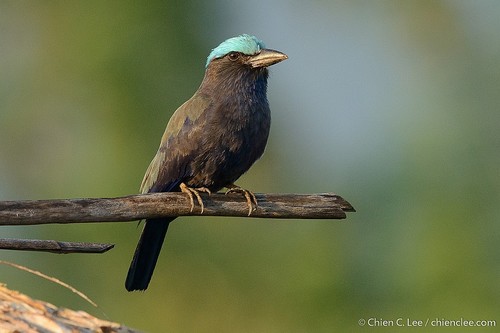
Purple-winged Roller
Coracias temminckii
Endemic to the islands of Sulawesi, the Purple-winged Roller is a tropical jewel known for its acrobatic flight and stunning violet plumage. This 'perch-and-pounce' predator brings a splash of iridescent color to the Indonesian canopy.
Quick Identification
Size
30-34 cm (12-13.5 inches) in length; weight approximately 140-160 grams (4.9-5.6 oz).
Colors
Dazzling turquoise crown and underparts, deep violet-purple wings and tail, and a warm olive-brown back and mantle.
Key Features
- Striking iridescent purple wings visible in flight
- Vibrant azure-blue crown and breast
- Heavy, slightly hooked black bill
- Stocky, jay-like build with a squared-off tail
When You’ll See Them
Geographic range
Where Does the Purple-winged Roller Live?
Native to the lush tropical landscapes of Southeast Asia, the Purple-winged Roller is a true island specialist. It is found exclusively in the Sulawesi subregion of Indonesia, spanning the main island of Sulawesi as well as its smaller neighbors including Bangka, Lembeh, Manterawu, Muna, and Butung. Within this volcanic archipelago, they are a common sight in lowland areas where primary forest meets open clearing.
Basemap © OpenStreetMap contributors
Behavior
The Purple-winged Roller is a master of the 'perch and pounce' hunting technique. Often seen sitting motionless on high, exposed branches or telephone wires, it scans the ground for movement. When prey is spotted, it performs a swift, direct dive to snatch the target before returning to its lookout. Like other rollers, they are known for their acrobatic aerial displays during the breeding season, involving steep dives and rolling maneuvers that show off their namesake purple wings.
These birds are generally solitary or found in pairs, maintaining a watchful presence over their territory. While they can be somewhat wary of humans, they are highly vocal, often letting out harsh, raspy squawks that cut through the forest canopy. They are non-migratory, remaining in their tropical island home year-round where they nest in natural tree hollows or abandoned woodpecker holes high above the ground.
EverydayEarth exclusive
Camera Tips
To capture the Purple-winged Roller on camera, you need to think vertically. These birds rarely spend time on the forest floor, so a standard ground-level trail camera won't yield many results. Instead, look for prominent, dead 'snag' branches that rise above the surrounding foliage at the edge of a clearing. Using a strap-mount to position your camera 10–15 feet up a neighboring tree, angled toward one of these popular lookout points, is the most effective strategy.
Because these birds are incredibly fast when they dive for prey, you must prioritize a fast shutter speed or high-frame-rate video settings. If your AI camera supports it, enable 'Action' or 'Bird' modes to reduce motion blur. These rollers have high site fidelity, meaning if you see one on a specific branch today, there is a very high probability it will return to that same spot tomorrow to hunt.
Lighting is your biggest challenge and your best friend with this species. Their purple and turquoise feathers are structural colors that look dull in the shade but glow brilliantly in direct sunlight. Position your camera facing north or south to avoid direct lens flare while ensuring the perch is well-lit by the morning or late afternoon sun. If you are lucky enough to find a nesting hollow in a tree trunk, set your camera for short video bursts (10-15 seconds) to capture the fascinating social interactions as the pair exchanges food.
Similar Species
Species that look similar or are commonly confused with Purple-winged Roller.
Frequently Asked Questions
Record Purple-winged Roller at your habitat
Connect a camera to start building your own species record — AI identifies every visitor automatically.