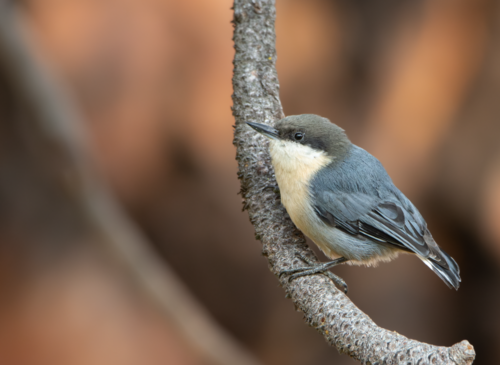
Pygmy Nuthatch
Sitta pygmaea
A tiny dynamo of the western pine forests, the Pygmy Nuthatch is a social superstar known for its acrobatic tree-climbing and communal spirit. These pint-sized birds bring a burst of energy and a constant chorus of 'pip-pip' calls to any backyard with a few tall pines.
Quick Identification
Size
Length: 3.5-4.3 in (9-11 cm); Wingspan: 7.5-8.5 in (19-21.5 cm); Weight: 0.3-0.4 oz (9-11 g)
Colors
Slate-gray upperparts with a buff or white chest. Features a distinct grayish-brown cap that extends just below the eye and a pale white patch on the back of the neck.
Key Features
- Distinct brownish-gray cap meeting a dark eye line
- Small white spot on the nape of the neck
- Short tail and very small, stubby body
- Highly social, often seen in groups of 10 or more
When You’ll See Them
Behavior
Pygmy Nuthatches are among the most social songbirds in North America. Unlike many other nuthatch species that are solitary or found only in pairs, these tiny birds move in bustling "bushes" of activity, often numbering over a dozen individuals. They are famous for their communal roosting habits; during cold winter nights, dozens of individuals have been known to huddle together in a single tree cavity to share body heat and survive the freeze.
These birds are incredibly active and acrobatic, frequently seen spiraling down tree trunks headfirst or hanging upside down from the tips of pine branches to reach seeds. They have a constant, high-pitched "pip-pip-pip" call that makes them easy to locate even before you see them. While they are generally bold around humans, they spend the majority of their time high in the canopy, coming down to lower levels primarily for water or high-quality food sources.
EverydayEarth exclusive
Camera Tips
To capture the Pygmy Nuthatch on camera, focus your efforts on their dependence on Ponderosa pines. Place your camera near an elevated bird bath or a specialized suet feeder, but ensure it is positioned at least 5 to 8 feet off the ground. These birds are canopy-dwellers and are often hesitant to drop to ground-level cameras. Angling your camera slightly upward toward a trunk or a hanging feeder will yield the most natural action shots of them spiraling down the bark.
Since they are tiny and move with erratic, lightning-fast motions, use a high shutter speed or a 'burst' photo mode. They are communal, so if your AI camera triggers on one bird, keep it recording; you are likely to see five or six more follow the leader within seconds. A camera placed near a known nesting or roosting cavity in a dead 'snag' tree can capture the incredible sight of multiple birds entering the same hole at dusk during the winter months.
Luring them is best done with high-energy foods that mimic their natural foraging targets. They are particularly fond of suet, peanut butter spreads, and shelled sunflower seeds. If you apply a smear of 'bark butter' or suet directly into the deep crevices of a pine tree within the camera's field of view, you will capture stunning, close-up footage of their natural foraging behavior as they pry the food out with their needle-like bills.
Similar Species
Species that look similar or are commonly confused with Pygmy Nuthatch.
Brown-headed Nuthatch
Nearly identical in appearance and behavior, but the Brown-headed Nuthatch is found only in the Southeastern US, while the Pygmy is exclusively Western.
Red-breasted Nuthatch
Distinguished by a bold black line through the eye, a white eyebrow, and rusty-colored underparts.
White-breasted Nuthatch
Much larger with a clean white face and no brown on the head; typically found alone or in pairs rather than large groups.
Frequently Asked Questions
Record Pygmy Nuthatch at your habitat
Connect a camera to start building your own species record — AI identifies every visitor automatically.