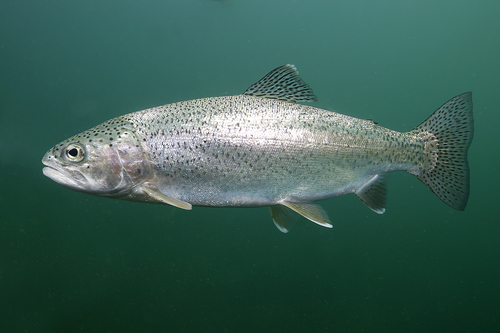
Rainbow Trout
Oncorhynchus mykiss
A flash of silver and a streak of crimson—the Rainbow Trout is the quintessential icon of cold, rushing waters. Renowned for its acrobatic leaps and stunning coloration, this resilient fish is a favorite for backyard observers with a passion for aquatic life.
Quick Identification
Size
12-30 inches (30-76 cm); weight typically 1-8 lbs (0.5-3.6 kg), though ocean-going 'Steelhead' can reach over 20 lbs
Colors
Olive-green back, silvery sides with a signature pinkish-red horizontal stripe, and a white belly; covered in small black spots
Key Features
- Vibrant pink-to-red stripe along the lateral line
- Prominent black spots on the dorsal, adipose, and caudal (tail) fins
- Square-shaped tail with light spotting
- Small adipose fin located between the dorsal fin and tail
When You’ll See Them
Behavior
Rainbow Trout are energetic and highly mobile fish, known for their incredible swimming strength and ability to leap high out of the water. In a stream environment, they are master navigators of current, typically positioning themselves behind submerged rocks or logs to conserve energy while waiting for food to drift past. They are territorial during feeding, with larger, more dominant fish claiming the best 'lies' where food is most abundant.
While resident Rainbow Trout stay in freshwater their entire lives, some populations are anadromous, meaning they migrate to the ocean and return to freshwater only to spawn. They are highly sensitive to water temperature and oxygen levels, making them excellent indicators of environmental health. Their interaction with humans is primarily through angling, but they can become quite bold in backyard ponds or protected areas where they are regularly fed.
EverydayEarth exclusive
Camera Tips
Capturing Rainbow Trout on camera requires a specialized underwater setup, as traditional trail cameras won't work through the water's surface from a distance. If you have a creek or pond, use an action camera with a waterproof housing or a dedicated underwater trail camera. The most effective placement is 'side-on' to the current in a transition zone—specifically where a shallow, bubbling 'riffle' flows into a deeper, calmer pool. Trout love to hang out at the head of these pools to catch food as it washes down. Position the camera about 6 to 12 inches off the bottom, angled slightly upward toward the surface to take advantage of natural light filtering down.
Lighting is the biggest challenge when filming underwater. To get the best color out of that iconic red stripe, aim for mid-morning or mid-afternoon when the sun is at an angle; midday sun can create harsh glare on the water's surface that reflects back into the lens. Using a polarizing filter on your camera lens can significantly reduce this glare and improve clarity. If your water is slightly murky, place a white or light-colored flat stone in the frame; this acts as a 'backplate' that helps the camera's auto-focus and exposure settings lock onto the darker shape of the fish as it passes by.
For those monitoring a backyard pond, you can 'train' the trout to appear in front of the lens by using an automatic feeder or consistently dropping food in the same spot at the same time each day. In a wild stream, you don't need bait—simply find a natural 'bottleneck' where the water is forced between two rocks. These are natural highways for fish. Set your camera to high-frame-rate video (60fps or higher) because trout movements are lightning-fast; this allows you to watch their strikes or leaps in smooth slow-motion during playback. During the spring spawning season, look for 'redds'—bright, clean patches of gravel in shallow water where trout gather; placing a camera nearby (at a respectful distance) can capture incredible social behaviors.
Similar Species
Species that look similar or are commonly confused with Rainbow Trout.
Frequently Asked Questions
Record Rainbow Trout at your habitat
Connect a camera to start building your own species record — AI identifies every visitor automatically.