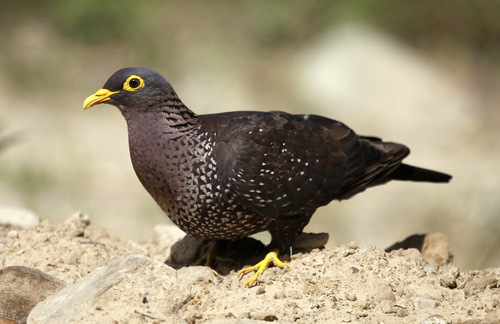
Rameron Pigeon
Columba arquatrix
With its striking yellow 'spectacles' and deep maroon plumage, the Rameron Pigeon is a jewel of the African canopy. Often found following the seasonal ripening of wild olives, this nomadic fruit-hunter brings a touch of wild elegance to leafy suburban gardens.
Quick Identification
Size
37-42 cm (14.5-16.5 inches) long; weight 300-450 g (10.5-16 oz)
Colors
Deep maroon or purple-brown back and wings speckled with white; slate-grey head and underparts; bright yellow bill, legs, and skin around the eyes.
Key Features
- Bright yellow eye-patch and bill
- Maroon-purple plumage with white 'stars'
- Large, robust pigeon build
- Yellow legs and feet
- Slate-grey head
When You’ll See Them
Behavior
Unlike the more common urban pigeons, the Rameron pigeon has a distinctive, deep cooing call that carries well through wooded areas. During the breeding season, males perform spectacular display flights, involving a steep, clapping climb followed by a graceful, stiff-winged glide back down to their perch.
They are increasingly common in mature gardens, especially those with tall, established trees and consistent water sources. While they may visit gardens daily for a few weeks, they will often vanish once a specific fruit source is depleted, moving on to the next location in their wide-ranging territory.
EverydayEarth exclusive
Camera Tips
Because they are wary of movement, camouflage is essential. Ensure your camera isn't positioned in a high-traffic area where human activity might startle them. If you are using a trigger-based AI camera, set the sensitivity to high. These pigeons are large and fast; by the time a slow sensor triggers, the bird may have already taken flight. Using 'Burst Mode' or a 5-10 second video clip will help you capture the moment they land, which is often when they display their impressive wingspan and white-speckled plumage.
Water is the most reliable lure for this species. A birdbath with moving water—such as a solar-powered dripper or fountain—is far more effective than a still pool. The sound of splashing water will draw them down from the canopy. In terms of timing, the early morning light between 7:00 and 9:00 AM provides the best color saturation for their deep maroon feathers. Avoid placing the camera facing directly into the rising sun, as the flare can wash out the subtle white spotting on their wings.
If you want to encourage them to stay longer in front of the lens, try a platform feeder stocked with halved fruits like grapes, plums, or softened figs. They aren't typical seed-eaters, so standard birdseed won't usually attract them. Finally, if your camera has adjustable frame rates, opt for 60fps. This allows for smooth playback of their powerful take-offs, which are often accompanied by a loud wing-clapping sound that is a signature of the species.
Similar Species
Species that look similar or are commonly confused with Rameron Pigeon.
Frequently Asked Questions
Record Rameron Pigeon at your habitat
Connect a camera to start building your own species record — AI identifies every visitor automatically.