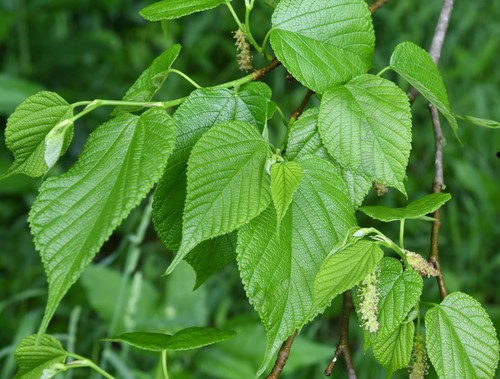
red mulberry
Morus rubra
The red mulberry is nature's summer snack bar, producing sweet, dark fruits that attract over 60 species of birds and mammals. This native North American tree is a centerpiece for any backyard wildlife watcher looking to see vibrant colors and frantic feeding activity.
Quick Identification
Size
Height: 10-21 meters (35-70 feet); Trunk diameter: 30-60 cm (12-24 inches)
Colors
Dark green leaves with pale, hairy undersides; gray-brown bark with reddish tints; fruit transitions from green to red to deep purple-black
Key Features
- Ovate or heart-shaped leaves with rough, sandpaper-like tops
- Soft, densely hairy leaf undersides
- Cylindrical fruit clusters resembling long blackberries
- Reddish-brown bark that peels in thin flakes on older trees
When You’ll See Them
Behavior
The red mulberry is a vital 'anchor' species in the North American ecosystem, acting as a high-energy buffet for local wildlife during the late spring and early summer. Unlike many other trees that provide mast (nuts) in the fall, the red mulberry produces its sugar-rich fruits in early summer, filling a critical nutritional gap for nesting birds and nursing mammals. It is a shade-tolerant tree, often growing in the understory of larger hardwood forests or along the fertile edges of riverbanks and suburban woodlots.
While it is a slow-growing deciduous tree, its impact on the backyard ecosystem is immediate. It doesn't exhibit 'behavior' in the animal sense, but its phenology—the timing of its budding and fruiting—dictates the movement patterns of dozens of species. When the fruit ripens, the tree becomes a hub of social activity, where various species of birds and mammals are forced into close proximity to share the bounty, often leading to fascinating inter-species observations.
EverydayEarth exclusive
Camera Tips
To capture the incredible diversity of wildlife drawn to a red mulberry, position your camera during the ripening window (typically June). Focus your lens on a specific cluster of ripening berries rather than the whole tree. If your camera has a 'Macro' or close-focus setting, use it to get within 3-5 feet of a low-hanging branch. This will allow you to capture high-detail footage of songbirds like Scarlet Tanagers, Baltimore Orioles, and Cedar Waxwings as they pluck the fruit. Use a high-speed trigger or burst mode, as these birds move quickly and decisively when feeding.
Don't overlook the ground! Fallen mulberries are a magnet for terrestrial wildlife. Place a second camera about 12 inches off the ground, aimed at the base of the tree where fruit has collected. This is the best way to record nocturnal visitors like Virginia opossums, raccoons, and even gray foxes who come to scavenge the sweet drops. Ensure your PIR (passive infrared) sensor sensitivity is set to high, as the movement of small rodents like chipmunks or squirrels scurrying through the leaf litter can be subtle.
For the best lighting, aim your camera north or south to avoid the harsh glare of the rising or setting sun filtering through the leaves. If you are using a trail camera with video capabilities, set the clip length to at least 20 seconds. Birds often land, look around cautiously, and then begin a fascinating sequence of feeding and 'beak wiping' on the branches, which is best captured in longer video segments rather than still photos.
Because the fruiting season is short—usually only 3 to 4 weeks—check your camera every few days to ensure the lens hasn't been blocked by rapid summer foliage growth or obscured by fruit juices. A quick wipe of the lens with a damp cloth during the peak of June will keep your shots crisp. If you have an AI-powered camera, this is the perfect time to set up 'Activity Zones' on the specific branches where fruit is most abundant to minimize false triggers from wind-blown leaves.
Similar Species
Species that look similar or are commonly confused with red mulberry.
Frequently Asked Questions
Record red mulberry at your habitat
Connect a camera to start building your own species record — AI identifies every visitor automatically.