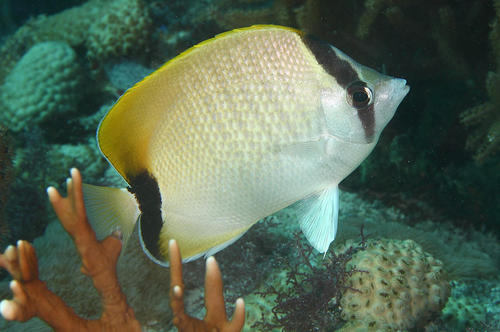
Reef Butterflyfish
Chaetodon sedentarius
The Reef Butterflyfish is a master of the Atlantic depths, recognized by its striking 'masked' eye and elegant, disc-shaped body. Often found in pairs or shimmering schools, this resilient species is a highlight of any Caribbean reef exploration.
Quick Identification
Size
Typically 10-15 cm (4-6 inches) in length; rarely exceeds 0.2 kg (0.4 lbs)
Colors
Silvery-white to pale yellow body; features two prominent dark vertical bars—one through the eye and one at the rear of the body extending into the fins.
Key Features
- Vertical black bar masking the eye
- Dark vertical band across the rear body and dorsal fin
- Compressed, disc-shaped body profile
- Yellowish tint on the tail and dorsal margins
When You’ll See Them
Geographic range
Where Does the Reef Butterflyfish Live?
The Reef Butterflyfish is a staple of the Western Atlantic Ocean's vibrant marine ecosystems. Its range begins as far north as the coast of North Carolina and extends southward through the warm waters of the Florida Keys, the Gulf of Mexico, and the entire Caribbean basin. These hardy fish are also found along the South American coastline, stretching down as far as the tropical reefs of Brazil, making them one of the most widely distributed butterflyfish in the Atlantic.
Basemap © OpenStreetMap contributors
Behavior
The Reef Butterflyfish is a diurnal species, meaning it is most active during the daylight hours when it can be seen navigating the complex structures of coral and rocky reefs. Unlike many of its more territorial relatives, this species is known for its social flexibility; it is frequently observed in pairs or small groups, and occasionally forms large, synchronized schools that drift above the reef surface, a behavior that earned it the local nickname 'school mistress.'
These fish are generally non-aggressive and spend the majority of their time foraging. They have a methodical swimming style, using their pectoral fins to maneuver precisely into tight crevices. At night, they retreat into the shadows of the reef, often darkening their coloration slightly to blend into the rocks and avoid nocturnal predators like moray eels or groupers. While they are naturally cautious, they often become acclimated to human presence in popular snorkeling and diving locations.
EverydayEarth exclusive
Camera Tips
Capturing the Reef Butterflyfish on an underwater AI-powered camera requires a focus on clarity and lighting. Since these fish often inhabit deeper reef slopes where red light is filtered out by the water column, using an external light source or a red filter is essential to bring out their true yellowish-white tones. Position your camera housing near a known 'cleaning station' or a high-relief coral head where these fish naturally congregate to forage. An angle that captures the fish in profile is best for the AI to recognize the distinctive vertical eye-bar.
For those with coastal property or docks in tropical regions, mounting a camera on a submerged piling can be highly effective. The Reef Butterflyfish is attracted to the vertical structure and the small crustaceans that grow on the pilings. Ensure the camera is mounted at a height of 2-3 meters below the low-tide line to stay within their preferred depth range. Using a wide-angle lens helps capture the schooling behavior often seen in this species, though you should keep the lens within 1 meter of the subject for the sharpest detail.
If you are using bait to draw them into the frame, small mesh bags filled with chopped squid or clams can be secured to the reef. However, be mindful that this may also attract larger predators. Set your camera to a high frame rate (at least 60fps) because, while they seem to drift slowly, butterflyfish can dart away with surprising speed if startled. In areas with high turbidity, use a lens hood to minimize backscatter from the camera's lights, which can confuse AI detection algorithms.
Similar Species
Species that look similar or are commonly confused with Reef Butterflyfish.
Frequently Asked Questions
Record Reef Butterflyfish at your habitat
Connect a camera to start building your own species record — AI identifies every visitor automatically.