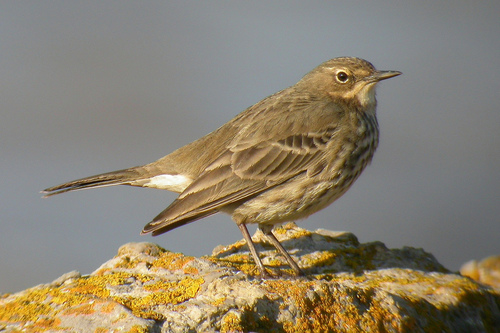
Rock Pipit
Anthus petrosus
A master of the rugged shoreline, the Rock Pipit is one of the few songbirds that calls the salt-sprayed cliffs home. With its dusky plumage and resilient nature, it is a fascinating subject for coastal wildlife watchers.
Quick Identification
Size
Length: 16.5-17 cm (6.5-6.7 in) | Wingspan: 23-27 cm (9-10.6 in) | Weight: 20-30 g (0.7-1.1 oz)
Colors
Dusky olive-brown or greyish upperparts with dark streaks; underparts are buff to off-white with heavy, blurred dark streaking. Legs are typically dark brown or blackish. Sexes are similar in appearance.
Key Features
- Dark legs and bill distinguish it from the Meadow Pipit
- Smoky-grey outer tail feathers (rather than white)
- Heavily streaked, dusky underparts
- Distinctive 'pumping' motion of the tail while walking
When You’ll See Them
Behavior
The Rock Pipit is a hardy specialist of the shoreline, often seen scurrying among kelp and sea-wrack or perched atop jagged coastal rocks. Unlike many other small birds that flee at the first sign of a storm, these pipits thrive in the spray-drenched intertidal zone. They are highly territorial, especially during the breeding season, and exhibit a unique 'neighborhood watch' behavior where males may help a neighbor defend against an outside intruder.
When on the ground, they move with a frantic, jerky walk, constantly bobbing their tails. Their flight is typically low and undulating, often accompanied by a sharp 'feest' call as they take wing. While they are usually solitary or found in pairs during the summer, you might see small, loose groups foraging together in the winter months, particularly after a storm has washed fresh seaweed and invertebrates onto the beach.
EverydayEarth exclusive
Camera Tips
To capture the Rock Pipit on camera, focus your efforts on the 'strandline'—the area where the high tide leaves behind piles of seaweed. This is their primary grocery store. Place your camera low to the ground, no more than 6-12 inches high, and angle it slightly upward or parallel to the rocks. Using a wide-angle lens or a macro-focusing setting is ideal, as these birds are often quite bold and will approach cameras placed near their favorite foraging spots.
Because they live in high-glare environments, try to position your camera with the sun behind it to avoid blowing out the highlights on the wet rocks and water. If you are in a garden that borders the coast, you can occasionally lure them in with a shallow, stone-lined birdbath, but they are unlikely to visit traditional bird feeders. They are much more interested in the insects living in natural debris, so leaving a patch of native coastal vegetation or even a small pile of damp seaweed near your camera can act as a natural 'bait' area.
Technical settings should prioritize a fast shutter speed, as these birds are constantly in motion, bobbing their tails and darting after flies. A trigger speed of 0.2 seconds or faster is recommended to catch them before they hop out of frame. If your camera has a 'burst' or 'multi-shot' mode, enable it; their rapid movements mean that out of three photos, one will likely be a perfect action shot while the others might be blurred. Finally, ensure your camera housing is salt-resistant or protected by a weather-shield, as sea spray is highly corrosive.
Similar Species
Species that look similar or are commonly confused with Rock Pipit.
Frequently Asked Questions
Record Rock Pipit at your habitat
Connect a camera to start building your own species record — AI identifies every visitor automatically.