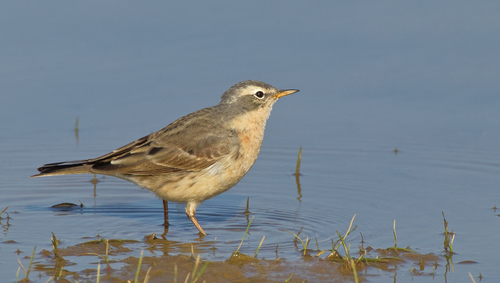
Water Pipit
Anthus spinoletta
A hardy traveler from the high mountain peaks, the Water Pipit is a master of the shoreline. Look for its elegant tail-pump and dark legs as it explores winter wetlands and garden pond edges.
Quick Identification
Size
Length: 15.5–17 cm (6.1–6.7 in); Wingspan: 23–28 cm (9.1–11 in); Weight: 18–25 g (0.6–0.9 oz)
Colors
In winter, grey-brown upperparts and white underparts with blurry streaks; summer brings a grey head and a delicate pinkish-orange wash on the breast. Legs are consistently dark, almost black.
Key Features
- Dark, blackish legs and feet
- Strong white stripe above the eye (supercilium)
- Rhythmic downward tail-pumping motion
- White outer tail feathers visible during short, jerky flights
When You’ll See Them
Behavior
The Water Pipit is an energetic and terrestrial songbird that prefers walking or running over hopping. It is most easily recognized by its 'tail-wagging' habit—a constant, rhythmic pumping of the tail as it searches for food along the ground. During the winter months, they are often solitary or move in loose, small flocks, maintaining a wary distance from humans and other large animals.
When disturbed, they take flight with a sharp, explosive 'pseep' call, flying in a characteristic undulating pattern before landing again a short distance away. While they are alpine specialists during the breeding season, their winter behavior is centered entirely around water. They are highly focused foragers, spending hours meticulously inspecting mudflats, shoreline debris, and shallow puddles for hidden invertebrates.
EverydayEarth exclusive
Camera Tips
To capture the elusive Water Pipit on your backyard or trail camera, you must focus on 'wet feet' placement. These birds are rarely seen in dry, grassy areas or at traditional hanging feeders. Instead, position your camera at the very edge of a water feature, such as a garden pond margin, a shallow drainage ditch, or a consistently damp patch of soil. Because they are ground-level foragers, mount your camera extremely low—ideally just 6 to 10 inches above the ground. Using a short tripod or a ground-spike mount will give you that intimate, eye-level perspective that makes for stunning wildlife photography.
Since Water Pipits are small and move with quick, jerky motions, camera settings are vital. Set your trigger speed to the fastest possible setting and use a high-frequency burst mode (3-5 photos per trigger). This increases your chances of catching them with their tail mid-pump or with a beak full of larvae. If your camera has adjustable PIR (motion sensor) sensitivity, set it to 'High' to ensure the movement of a small bird at a distance still triggers the shutter. Because they visit during the winter when light levels are lower, ensure your camera is positioned to catch the maximum amount of morning light to keep shutter speeds high and images crisp.
Traditional birdseed won't attract this species. To lure a Water Pipit into your camera's frame, try creating a 'micro-marsh.' A shallow tray filled with mud and wet leaf litter can be a magnet for the small invertebrates they eat. Some enthusiasts have success by placing a small, solar-powered water dripper over a flat stone; the sound and movement of water are irresistible to pipits. If you are in a cold climate, a heated birdbath or keeping a small patch of mud from freezing can make your backyard the primary neighborhood destination for any wintering pipits.
Pay close attention to the background of your shot. Because the Water Pipit’s winter plumage is a mix of muted greys and browns, they can easily blend into a muddy background. Try to angle your camera so the bird is silhouetted against a patch of green moss or lighter-colored gravel. This contrast will help AI-powered cameras identify the species more accurately and produce a much more professional-looking image for your collection.
Similar Species
Species that look similar or are commonly confused with Water Pipit.
Frequently Asked Questions
Record Water Pipit at your habitat
Connect a camera to start building your own species record — AI identifies every visitor automatically.