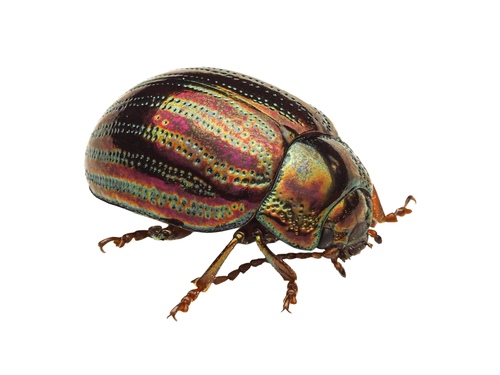
Rosemary Beetle
Chrysolina americana
Adorned in shimmering metallic stripes of emerald and amethyst, the Rosemary Beetle is a slow-moving jewel of the herb garden. Often found clinging to fragrant lavender and rosemary, this flightless beauty is a favorite for macro photographers.
Quick Identification
Size
Length: 6-9 mm (0.24-0.35 inches)
Colors
Brilliant metallic sheen with alternating vertical stripes of purple-bronze and emerald green. Both males and females share this iridescent patterning.
Key Features
- Metallic purple and green longitudinal stripes
- Oval, domed body shape typical of leaf beetles
- Flightless due to shortened, vestigial wings
- Found almost exclusively on aromatic Mediterranean herbs
When You’ll See Them
Behavior
The Rosemary Beetle is a slow-moving, jewel-like insect that has become a staple of modern garden ecosystems. Despite its scientific name, 'americana', it is actually native to the Mediterranean region and was introduced to other parts of the world through the trade of ornamental plants. Because they are flightless, these beetles are remarkably sedentary; an individual might spend its entire life cycle on a single rosemary or lavender bush, provided there is enough food to sustain it.
Unlike many garden insects that disappear during the winter, the Rosemary Beetle has a somewhat unusual life cycle. They are most active from late summer through the spring, often remaining visible and feeding during mild winter days. When threatened, they exhibit a classic defensive behavior known as 'thanatosis'—they tuck in their legs and antennae and drop from the plant into the soil below, where their dark undersides make them difficult for predators to spot among the leaf litter.
EverydayEarth exclusive
Camera Tips
Capturing the Rosemary Beetle on a backyard camera requires a macro lens or a very close-focusing trail camera. Because these beetles are only about 8mm long, your camera needs to be positioned within 4 to 8 inches of the host plant's foliage. Using a flexible arm mount attached to a garden stake is the best way to get your lens level with the terminal shoots of a lavender or rosemary bush, which is where the beetles congregate to feed on new growth.
For the best visual results, focus on lighting. The Rosemary Beetle's metallic exoskeleton acts like a mirror, which can cause 'hot spots' or glare in direct midday sun. To capture the full spectrum of their purple and green stripes, set your camera to record during the 'golden hour' or on slightly overcast days. This diffused light will reveal the depth of their iridescence without washing out the colors. If your camera has manual exposure settings, underexposing slightly can help preserve the detail in their shimmering wing cases.
Since these beetles move slowly and are flightless, they are the perfect subjects for time-lapse mode. Setting a trigger interval of 30 to 60 seconds will allow you to document their foraging patterns and social interactions over several hours. In the late summer and autumn, look for mating pairs; the male is typically smaller and will be seen riding on the back of the female. Positioning your camera near the flowering spikes of the plant increases your chances of a 'hero shot,' as the beetles are highly attracted to the nectar and pollen as a secondary food source.
Similar Species
Species that look similar or are commonly confused with Rosemary Beetle.
Mint Beetle
Uniformly bright green or coppery with a pitted texture, lacking the Rosemary Beetle's distinct purple stripes.
Tansy Beetle
A bright, solid metallic green beetle that is much larger and specifically associated with tansy plants in damp habitats.
Dogbane Leaf Beetle
Displays a similar rainbow iridescence but has a more elongated body and feeds on dogbane or milkweed plants.
Frequently Asked Questions
Record Rosemary Beetle at your habitat
Connect a camera to start building your own species record — AI identifies every visitor automatically.