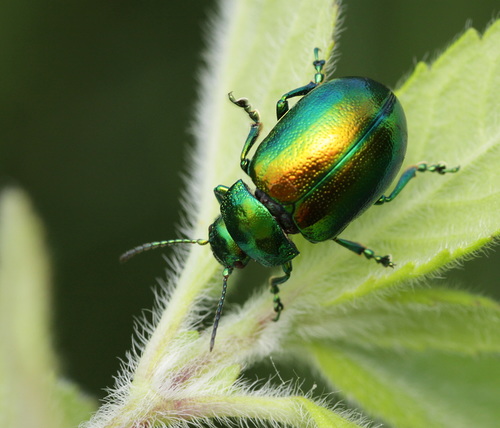
Tansy Beetle
Chrysolina graminis
Known as the 'Jewel of York,' this rare and radiant beetle is a masterpiece of natural iridescence. Discover how to spot this metallic green wonder in its riverside home.
Quick Identification
Size
7.7–10.5 mm (0.3–0.4 inches) in length
Colors
Brilliant iridescent emerald green with a coppery or golden metallic sheen; both sexes appear similar
Key Features
- Bright metallic green coloration with a coppery tinge
- Distinctive 'pitted' texture on the elytra (wing cases)
- Rounded, oval body shape
- Strongly associated with the Tansy plant
When You’ll See Them
Behavior
The Tansy Beetle is often referred to as the 'Jewel of York' due to its stunning iridescent appearance and its primary stronghold along the River Ouse. These beetles are relatively sedentary and are poor fliers, often spending their entire lives within a few hundred meters of where they hatched. They emerge from the soil in early spring to feed and mate, with their lifecycle intimately tied to the seasonal growth of their host plants.
During the day, they can be found basking on the upper leaves of plants to soak up the sun's warmth, which aids their digestion and activity levels. Despite their bright colors, which might seem conspicuous, the iridescent sheen can actually act as a form of camouflage among the shimmering, dew-covered leaves of wetland vegetation. They are generally solitary but may congregate in large numbers on a single healthy clump of Tansy if the habitat is favorable.
EverydayEarth exclusive
Camera Tips
Capturing the Tansy Beetle requires a specialized approach because of their small size and specific habitat. To get high-quality footage, you will need an AI-powered camera with a dedicated macro lens or a very short focal distance (ideally 5–10cm). Standard trail cameras will likely produce blurry results. Position your camera on a tripod or a ground-stake directly facing a healthy clump of Tansy foliage, focusing on the upper third of the plant where the beetles prefer to bask.
Lighting is the most critical factor for this species. Their metallic green color is created by the structural properties of their shell, meaning they look most vibrant in direct, bright sunlight. Aim your camera so the sun is behind the lens, illuminating the beetle's back to capture that signature golden-copper glow. If your camera has adjustable settings, a high shutter speed is beneficial to capture the crisp detail of the pitting on their wing cases even if they are crawling.
Timing is everything when looking for the 'Jewel.' The best months are May and June when the first generation of adults is most active, and again in August when the new generation emerges. Because they are flightless, you don't need to worry about them flying away quickly, but they are sensitive to vibrations. Set your camera to a 'Time-Lapse' or 'Motion Trigger' mode with high sensitivity. Since they move slowly, a short video clip (10-15 seconds) is often more rewarding than a still photo, as it captures the shifting colors of their iridescent shell as they move through the light.
Similar Species
Species that look similar or are commonly confused with Tansy Beetle.
Mint Beetle
Smaller and lacks the copper highlights of the Tansy Beetle; almost exclusively found on garden mint plants.
Rosemary Beetle
Identified by its distinctive metallic purple and green longitudinal stripes, typically found on rosemary or lavender.
Green Dock Beetle
Much smaller (4-6mm) and lacks the deep pitting on the elytra found on the Tansy Beetle.
Frequently Asked Questions
Record Tansy Beetle at your habitat
Connect a camera to start building your own species record — AI identifies every visitor automatically.