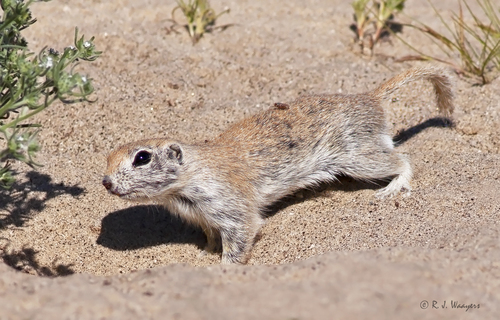
Round-tailed Ground Squirrel
Xerospermophilus tereticaudus
Meet the 'desert sentinel,' a charmingly slender squirrel that blends perfectly with the Southwest's sandy floor. Watch them periscope from their burrows and navigate the desert heat with surprising grace.
Quick Identification
Size
Length: 20-28 cm (8-11 inches); Weight: 110-170 g (4-6 oz)
Colors
Uniform sandy-buff, pale cinnamon, or grayish-tan coat; creamy white underbelly; no stripes or spots; tail often tipped with darker hairs.
Key Features
- Long, slender, cylindrical tail without bushy fur
- Uniform sandy-buff coat providing perfect desert camouflage
- Small, rounded ears that lie nearly flat against the head
- Large, dark eyes set high for a wide field of view
When You’ll See Them
Behavior
Socially, they live in loose colonies where they communicate using high-pitched, bird-like alarm whistles to warn neighbors of approaching predators like hawks, snakes, or coyotes. While they can be wary of humans, they often adapt well to suburban desert landscapes, particularly if there is a consistent water source. They spend a significant portion of the year in a state of dormancy—hibernating during the coldest winter months and often 'estivating' (a summer version of hibernation) during the hottest, driest weeks of July and August to conserve energy and moisture.
EverydayEarth exclusive
Camera Tips
To capture the best footage of Round-tailed Ground Squirrels, position your camera low to the ground—no more than 6 to 10 inches high. These squirrels are relatively small and stay close to the earth, so a high angle will miss the fine details of their expressive faces. Aim your lens toward the base of mesquite trees or near visible burrow entrances in sandy patches. Since they are most active in the early morning and late afternoon when the sun is low, try to position the camera facing north or south to avoid direct lens flare during these peak activity windows.
While we don't recommend heavy baiting, placing a shallow saucer of water in a dry desert yard is the ultimate 'camera trap' for these thirsty rodents. They are highly attracted to the sound and sight of water in the arid Southwest. If you want to encourage them to pause in front of the lens, a small scattering of native birdseed or unsalted sunflower seeds near a natural prop, like a sun-bleached log or a flat rock, will keep them busy long enough for a high-quality recording. Ensure your camera's trigger speed is set to the fastest possible setting, as their movements can be incredibly quick and erratic when they sense danger.
Seasonal timing is crucial for this species. They disappear underground for long stretches during the winter and the hottest, driest weeks of mid-summer. For the best results, set your cameras out in late February through May. This is their primary breeding season when they are most active, social, and prone to 'periscoping'—standing tall on their hind legs to scan for mates and rivals, which makes for fantastic video content. Use a 'burst' photo mode or short 15-second video clips to capture these dynamic behaviors without filling up your SD card too quickly.
Similar Species
Species that look similar or are commonly confused with Round-tailed Ground Squirrel.
Harris's Antelope Squirrel
Features a prominent white stripe on each side and a fluffier tail often held arched over the back.
Rock Squirrel
Much larger with a very bushy tail and variegated grayish-brown fur; prefers rocky areas over sandy flats.
Mohave Ground Squirrel
Visually similar but has a shorter tail with a white underside and is restricted to the western Mojave Desert.
Frequently Asked Questions
Record Round-tailed Ground Squirrel at your habitat
Connect a camera to start building your own species record — AI identifies every visitor automatically.