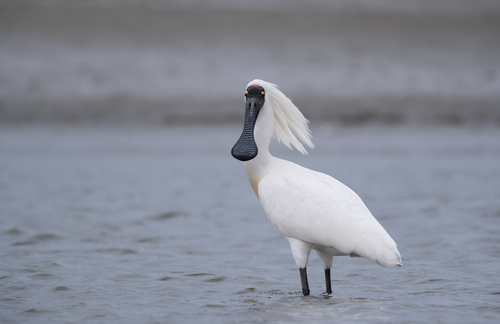
Royal Spoonbill
Platalea regia
With its iconic spoon-shaped bill and elegant white plumes, the Royal Spoonbill is a masterpiece of specialized evolution. Watch these graceful waders transform your local wetland into a theater of rhythmic movement.
Quick Identification
Size
Length: 74–81 cm (29–32 in); Wingspan: 120 cm (47 in); Weight: 1.4–2.1 kg (3.1–4.6 lbs)
Colors
Brilliant white plumage; jet-black bill, legs, and feet; breeding adults show yellow patches above the eyes and a red spot on the forehead.
Key Features
- Distinctive flat black spoon-shaped bill
- Long, black stilt-like legs
- White nuchal crest of long feathers during breeding
- Black facial skin extending past the eye
When You’ll See Them
Behavior
The Royal Spoonbill is a graceful, specialized wader known for its rhythmic foraging technique. It moves through shallow water with a steady gait, sweeping its bill in a wide lateral arc to detect prey by touch. They are highly social birds, often seen in small groups or large communal flocks, particularly when roosting or nesting in high trees overhanging water.
While they can be shy in remote areas, Royal Spoonbills are increasingly comfortable in suburban wetlands and regional parks. They spend a significant portion of their day preening their white feathers to maintain waterproofing and social bonds. In flight, they are easily identified by their outstretched necks and slow, powerful wingbeats, often traveling in 'V' formations or long lines.
EverydayEarth exclusive
Camera Tips
To capture high-quality footage of a Royal Spoonbill, camera placement is the most critical factor. Focus your AI-powered camera on the 'shallows'—areas where the water is no more than 15cm (6 inches) deep. These birds are tactile feeders, meaning they rely on feeling their prey in the mud, so look for muddy margins or reed edges where small fish and crustaceans congregate. Using a low-angle mount or a ground-level stake near the water’s edge will provide a stunning 'eye-level' perspective of their unique bill-sweeping motion.
Exposure management is your biggest technical hurdle. Because the Royal Spoonbill is pure white, it is very easy for your camera to 'overexpose' the bird in bright sunlight, resulting in a featureless white blob. To counter this, position your camera facing north (in the southern hemisphere) to avoid direct glare, or set it up in an area that receives dappled light. If your camera settings allow, try reducing the exposure compensation (EV) slightly. The best footage is almost always captured during the 'golden hours' of dawn or dusk when the light is softer and the birds are most active.
If you are monitoring a backyard pond, you can attract them by ensuring the water is chemical-free and supports a healthy population of native frogs or freshwater shrimp. During the breeding season (Spring through Summer), the birds grow magnificent long crest feathers. If you spot these, increase your video recording duration to at least 20–30 seconds. This will allow you to capture their complex social behaviors, such as 'allopreening' (preening each other) or the dramatic raising of their crest feathers during territorial displays.
Similar Species
Species that look similar or are commonly confused with Royal Spoonbill.
Frequently Asked Questions
Record Royal Spoonbill at your habitat
Connect a camera to start building your own species record — AI identifies every visitor automatically.