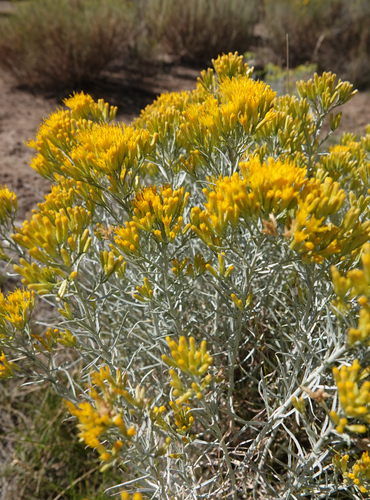
Rubber Rabbitbrush
Ericameria nauseosa
The golden crown of the high desert, Rubber Rabbitbrush provides a late-season burst of color and a critical sanctuary for western wildlife.
Quick Identification
Size
Height ranges from 1 to 7 feet (0.3 to 2.1 meters) with a similar spread
Colors
Silvery-gray to blue-green stems and leaves; brilliant golden-yellow flower clusters
Key Features
- Dense, rounded growth habit with multi-branching stems
- Felt-like coating on stems and narrow leaves
- Clusters of small, yellow, tubular flowers at branch tips
- Pungent, spicy, or rubber-like scent when leaves are crushed
When You’ll See Them
Sightings on EverydayEarth
Apr 2, 2026
A white rabbit is seen hopping across a grassy hillside in the middle distance. In the background, heavy fog and low clouds drift through the canyon behind a small outbuilding.
Behavior
Rubber Rabbitbrush is a resilient perennial shrub that plays a critical role in the western ecosystem, particularly as a late-season resource. Unlike many plants that peak in spring, this species waits until late summer and autumn to burst into a golden display of flowers. This timing makes it a vital 'bridge' for pollinators like monarch butterflies and honeybees when other nectar sources have dried up.
While the plant itself is stationary, it exhibits a fascinating relationship with its environment. It is highly drought-tolerant, using deep taproots to access moisture, and its 'nauseosa' name refers to the heavy, rubbery scent of its foliage rather than any toxic effect. It serves as a nursery for various gall-forming insects and provides essential thermal cover for ground-nesting birds and small mammals during the harsh winter months.
EverydayEarth exclusive
Camera Tips
When setting up a camera to monitor Rubber Rabbitbrush, your primary goal is to capture the incredible diversity of visitors it attracts. During the peak bloom in late summer, position your camera about 2 to 3 feet off the ground and angle it slightly downward to capture the flower heads. Because the yellow blooms are highly reflective, try to face your camera north or south to avoid the direct glare of the morning or evening sun, which can wash out the vibrant colors on film.
If you are using an AI-powered camera like the ones we recommend, enable high-speed video triggers. The Rubber Rabbitbrush is a magnet for fast-moving insects like the White-lined Sphinx moth and various butterfly species. To capture larger wildlife, such as Mule Deer or Jackrabbits that utilize the shrub for forage or cover, place the camera 5-10 feet back to provide a wide field of view that includes the entire profile of the bush. This is especially effective in winter when the shrub provides a rare splash of structure against the snow.
Don't overlook the 'macro' potential of this plant. If your camera allows for close-up focusing, target a single cluster of flowers. This setup is perfect for observing the complex social interactions of predatory wasps, bees, and even the occasional hummingbird that stops by for a nectar snack. In the colder months, keep the camera rolling; the dried seed heads are a favorite for wintering sparrows and finches, providing excellent opportunities for bird photography when other food sources are scarce.
Similar Species
Species that look similar or are commonly confused with Rubber Rabbitbrush.
Frequently Asked Questions
Record Rubber Rabbitbrush at your habitat
Connect a camera to start building your own species record — AI identifies every visitor automatically.