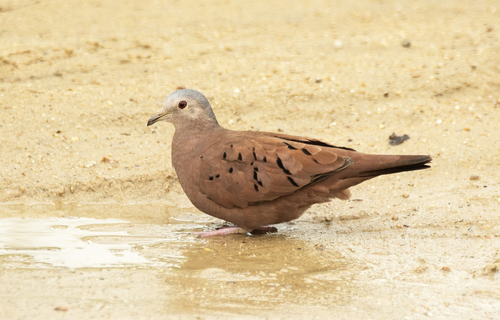
Ruddy Ground Dove
Columbina talpacoti
A small bird with a big personality, the Ruddy Ground Dove adds a splash of warm cinnamon color to backyards across the Americas. These social ground-dwellers are a delight to watch as they scuttle through gardens with their signature bobbing gait.
Quick Identification
Size
16.5-18 cm (6.5-7 in) long; wingspan 28-30 cm (11-12 in); weight 40-57 g (1.4-2.0 oz)
Colors
Males are a vibrant cinnamon-rufous with a pale gray head; females are a duller sandy brown with buff underparts
Key Features
- Rich cinnamon or sandy-brown plumage
- Contrasting pale gray cap and nape on males
- Small black spots on the wing coverts
- Stocky build with a short, rounded tail
When You’ll See Them
Geographic range
Where Does the Ruddy Ground Dove Live?
Native to the Neotropics, the Ruddy Ground Dove thrives across a vast territory stretching from Mexico through Central America and deep into South America, reaching as far south as northern Argentina and Paraguay. While they are permanent residents in their tropical core, adventurous individuals are frequently spotted in the southwestern United States, particularly during the winter months in southern Texas, Arizona, and southern California. These adaptable birds have successfully colonized diverse landscapes, from coastal plains to inland savannahs, making them one of the most widespread ground doves in the Western Hemisphere.
Basemap © OpenStreetMap contributors
Behavior
During the breeding season, males perform rhythmic bowing displays to attract mates, accompanied by soft, repetitive 'hoo-oo' calls. They are mostly terrestrial and prefer to take flight only when startled, usually retreating to the safety of a nearby low shrub or fence. Their flight is fast and direct, often characterized by a distinct whistling sound produced by their wings upon takeoff.
EverydayEarth exclusive
Camera Tips
If you are trying to attract them to a specific spot for your camera, use a 'scatter-feeding' technique rather than a hanging feeder. Sprinkle small grains like white proso millet, cracked corn, or commercial finch seed directly on the ground in front of the camera. Since they are social, once one bird finds the food, others will likely follow, giving you great group shots and interaction footage.
Lighting is crucial for capturing the male's vibrant cinnamon plumage. Position your camera so it faces north or south to avoid direct glare from the rising or setting sun, which can wash out their rich colors. The best activity usually occurs in the mid-morning and late afternoon, so ensure your camera is set to record in high-quality video or burst mode during these peak hours to catch their quick movements.
Because these doves are small and move with quick, jerky motions, choose a high frame rate for video if your camera allows it. If you have a water feature like a low-profile birdbath or a simple shallow tray of water, place the camera nearby; they are frequent drinkers and will often pause for a soak during the heat of the day, providing excellent opportunities for splashy action shots.
Similar Species
Species that look similar or are commonly confused with Ruddy Ground Dove.
Frequently Asked Questions
Record Ruddy Ground Dove at your habitat
Connect a camera to start building your own species record — AI identifies every visitor automatically.