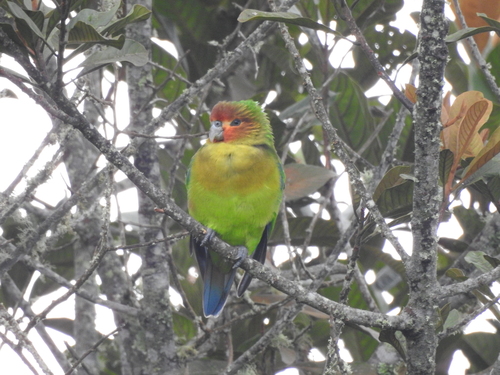
Rusty-faced Parrot
Hapalopsittaca amazonina
A colorful specialist of the high Andes, the Rusty-faced Parrot is a social and vocal bird that thrives in the misty cloud forests of Colombia and Venezuela. Its distinctive orange-red mask makes it a prized sight for wildlife observers and camera trappers alike.
Quick Identification
Size
23 cm (9 inches) in length; weighing approximately 97–115 g (3.4–4.1 oz)
Colors
Mainly green plumage; rusty-red to orange forehead and face; dark red shoulder patches; blue flight feathers; pale yellow eyes
Key Features
- Rusty-orange mask across the face and forehead
- Deep red 'shoulder' patch on the wing coverts
- Short, square green tail
- Pale yellowish beak and eye-ring
When You’ll See Them
Geographic range
Where Does the Rusty-faced Parrot Live?
Native to the South American continent, the Rusty-faced Parrot is a specialist of the Northern Andean highlands. Its core range is concentrated in the Eastern and Central Andes of Colombia and the mountain ranges of western Venezuela, with occasional recorded sightings in northern Ecuador. These birds are strictly montane, occupying a narrow elevational belt where the moisture-rich clouds provide the specific forest conditions they require to thrive.
Basemap © OpenStreetMap contributors
Behavior
Within their social groups, these parrots exhibit strong pair bonds and frequently engage in allopreening. They are quite sensitive to habitat disturbance and are rarely seen in open, deforested areas, preferring the safety of the dense cloud forest canopy. During the breeding season, they become more territorial and are usually seen only in pairs or small family units rather than large flocks.
EverydayEarth exclusive
Camera Tips
Providing a water source is one of the most effective ways to bring them into frame. A elevated birdbath or a solar-powered fountain that creates the sound of splashing water can lure them down from the high canopy to drink or bathe. Place the water feature in a small, sunlit clearing where the birds feel safe from predators but are still close to cover. The sound of moving water is especially effective in the quiet, damp environment of the cloud forest.
Adjust your camera settings for the challenging light of the Andes. High-altitude environments are often shrouded in mist or heavy cloud cover, so use a camera with a high-quality sensor that handles low light well. Set your device to a fast trigger speed (0.2 seconds or less) to catch their quick movements between branches, and utilize the 'burst' photo mode. For video, 15 to 20-second clips are ideal, as these parrots often pause to inspect a fruit before moving on. Early morning is the prime window; ensure your camera is active by sunrise to catch the flock's first foraging flight of the day.
Similar Species
Species that look similar or are commonly confused with Rusty-faced Parrot.
Frequently Asked Questions
Record Rusty-faced Parrot at your habitat
Connect a camera to start building your own species record — AI identifies every visitor automatically.