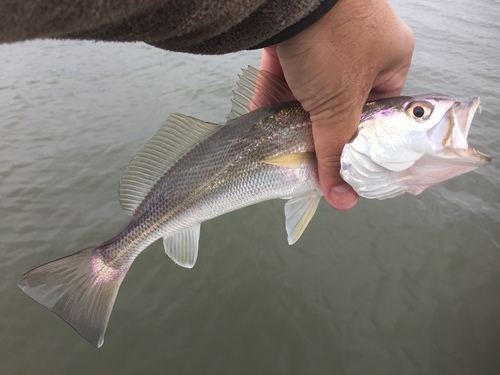
Sand Weakfish
Cynoscion arenarius
The ghost of the estuary, the Sand Weakfish is a shimmering, silver predator known for its 'croaking' calls and lightning-fast strikes. Often found patrolling sandy flats and dock lights, they are a favorite discovery for coastal backyard explorers.
Quick Identification
Size
Typically 10-15 inches (25-38 cm) in length, weighing between 0.5 to 2 lbs (0.2-0.9 kg). Large specimens can occasionally reach 20 inches.
Colors
Silvery overall with a pale, yellowish-white belly. The back often has a faint pinkish or yellowish metallic sheen. Fins are typically yellowish or clear, lacking the distinct dark spots found on its cousins.
Key Features
- Two prominent canine-like teeth in the upper jaw
- Lack of dark spots on the body or fins
- Yellowish tint on the pelvic and anal fins
- Slender, streamlined body with a large mouth
When You’ll See Them
Behavior
Sand Weakfish, often called Sand Seatrout, are energetic schooling fish known for their seasonal migrations between deep offshore waters and shallow inshore estuaries. While they are relatively short-lived compared to other members of the drum family, they are highly prolific. During the spawning season, males use specialized muscles to vibrate their swim bladders, creating a distinctive drumming or 'croaking' sound that can be heard through boat hulls or underwater microphones.
These fish are opportunistic hunters that move with the tides to find the best feeding grounds. In a backyard dock or pier setting, you'll often see them patrolling the edges of light shadows at night. They are less wary than the larger Spotted Seatrout but are still easily spooked by sudden movements or heavy vibrations on a dock.
EverydayEarth exclusive
Camera Tips
Capturing Sand Weakfish requires an underwater camera setup, ideally mounted to a dock piling or a weighted tripod on a sandy bottom. Because these fish are most active during low-light hours, use a camera with high-quality low-light sensors or a subtle infrared (IR) light source. Avoid bright white lights, as they can overexpose the fish's highly reflective silvery scales, resulting in a 'blown out' image where you lose all detail.
For the best framing, position your camera 12 to 24 inches off the seabed, angled slightly upward. Sand Weakfish tend to cruise the mid-to-lower water column. If you are filming from a dock, place the camera near the 'light line'—the boundary where your dock light hits the water. These predators often sit in the darkness just outside the light, darting in to grab prey attracted to the glow.
To keep a school in front of your lens for longer periods, use a mesh bait bag filled with crushed shrimp or fish scraps. Secure the bag about 3 feet away from the camera lens to ensure the AI can clearly identify the shape and movement of the fish as they investigate the scent. Check your housing for algae growth weekly, especially in warm estuarine waters where biofouling happens quickly.
Similar Species
Species that look similar or are commonly confused with Sand Weakfish.
Frequently Asked Questions
Record Sand Weakfish at your habitat
Connect a camera to start building your own species record — AI identifies every visitor automatically.