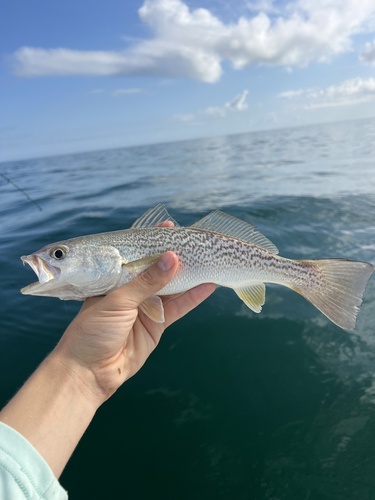
Weakfish
Cynoscion regalis
A shimmering specter of the Atlantic estuaries, the Weakfish is prized for its iridescent purple hues and its unique ability to 'drum' during the summer moon.
Quick Identification
Size
Typically 12–18 inches (30–45 cm) in length, though they can reach 36 inches (90 cm). Weight usually ranges from 1–3 lbs (0.5–1.4 kg), with trophy specimens reaching 15 lbs (6.8 kg).
Colors
Greenish-olive or dark grey back with shimmering iridescent shades of purple, lavender, blue, and bronze on the sides. The belly is silvery-white, and the upper body features small, dark, irregular spots.
Key Features
- Iridescent purple and bronze hues on the upper body
- Small, dark, irregular spots on the back and dorsal fins
- Two prominent canine-like teeth in the upper jaw
- Relatively thin and fragile mouth membranes
- Distinctive 'croaking' sound produced by males
When You’ll See Them
Behavior
Weakfish are highly migratory schooling fish that travel along the Atlantic coast. They are members of the drum family, named for the vibrating sound males produce with their swim bladders to attract mates during the spawning season. They are relatively shy and sensitive to noise, often moving in and out of estuaries with the tides.
Known for their 'weak' mouths, their maxillary membranes are thin and easily torn, which requires them to be careful foragers. They are most social during the spring and summer months when they congregate in large numbers in shallow coastal bays and sounds to spawn before retreating to deeper offshore waters as the temperature drops in autumn.
EverydayEarth exclusive
Camera Tips
To capture Weakfish on an AI-powered underwater camera, your best bet is a dock-mounted setup or a weighted tripod positioned in a tidal creek or salt marsh channel. Mount the camera 2 to 4 feet off the bottom, angled slightly upward to catch the silver undersides of the fish as they swim by. Because they are sensitive to vibrations, avoid mounting cameras directly to high-traffic floating docks; instead, use a stationary piling or a submerged weight system.
Visibility is the biggest challenge in Weakfish habitats. Plan your recording for the 'high slack' tide—the window right before and after high tide—when the clearest ocean water has pushed into the estuary. If your camera has adjustable LEDs, use a low-intensity or red-light setting at night; Weakfish are easily spooked by bright white artificial lights, which can cause them to dart away before the AI can trigger a recording.
To draw a school into your camera’s field of view, use a 'chum' approach. Secure a mesh bag containing crushed crabs or oily fish like menhaden about 3 feet away from the lens. This creates a scent trail that encourages the fish to linger in front of the sensor. Since Weakfish are fast, agile swimmers, set your camera to a high frame rate (60fps if possible) and a short trigger interval to ensure you capture the shimmering iridescence of their scales as they turn.
Similar Species
Species that look similar or are commonly confused with Weakfish.
Frequently Asked Questions
Record Weakfish at your habitat
Connect a camera to start building your own species record — AI identifies every visitor automatically.