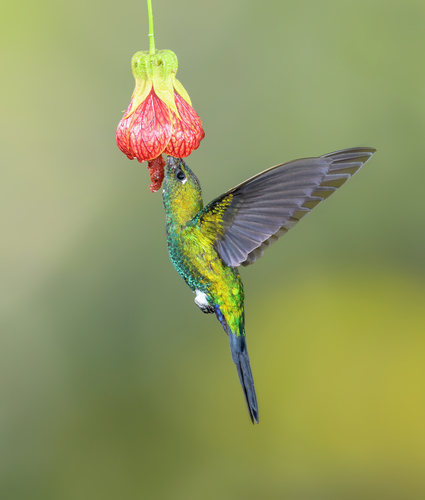
Sapphire-vented Puffleg
Eriocnemis luciani
A high-altitude jewel of the Andes, the Sapphire-vented Puffleg is famous for its shimmering green plumage and distinctive white 'boots'. Spotting one of these spirited hummingbirds is a highlight for any mountain-dwelling nature lover.
Quick Identification
Size
11–12 cm (4.3–4.7 in) in length; weighing approximately 5.5–6.5 g
Colors
Metallic green body, deeply forked blue-black tail, brilliant sapphire-blue undertail coverts, and snowy white leg puffs.
Key Features
- Large snowy-white downy leg puffs
- Deeply forked blue-black tail
- Sapphire-blue undertail coverts
- Straight, medium-length black bill
When You’ll See Them
Geographic range
Where Does the Sapphire-vented Puffleg Live?
This stunning hummingbird is a native resident of the high Andes in South America. Its core range extends from the southern reaches of Colombia through the temperate zones of Ecuador and into northern and central Peru. It thrives specifically in the misty, high-elevation corridors where the forest meets the alpine grasslands, making it a common sight for residents of high-altitude cities like Quito.
Basemap © OpenStreetMap contributors
Behavior
The Sapphire-vented Puffleg is a spirited high-altitude specialist known for its energetic foraging style. While it can be quite territorial over choice nectar sources, it often finds itself subordinate to larger, more aggressive hummingbird species like the Great Sapphirewing. It is most frequently observed at the edges of humid montane forests and within bushy páramo transitions, where it moves with rapid, jerky flight patterns between flowers.
In backyard settings or high-altitude gardens, these birds show a remarkable level of curiosity. They often forage at mid-heights but are not shy about descending to lower flowering shrubs. Unlike some hummingbirds that prefer to hover exclusively, the Sapphire-vented Puffleg will occasionally cling to a flower while feeding, showing off its namesake white 'pantaloons' as it balances against the mountain breeze.
EverydayEarth exclusive
Camera Tips
To capture the Sapphire-vented Puffleg on an AI-powered camera, placement is everything. These birds are most active in the early morning when nectar levels are highest. Position your camera approximately 1 to 1.5 meters off the ground, focusing directly on nectar-rich native flowers like Fuchsia or Salvia. Because these birds move incredibly fast, ensure your camera's trigger speed is set to its highest sensitivity and, if possible, use a 'burst' mode to catch the perfect wing position.
The white leg puffs are the bird's most distinctive feature but can easily be 'blown out' or overexposed in bright sunlight. Try to place your camera and feeding station in a spot with filtered, indirect light—such as under a porch or beneath a canopy of leaves. This helps maintain the detail in the white feathers while allowing the metallic greens and blues of the body to shimmer naturally without harsh glares.
If you are using a hummingbird feeder to attract them, choose one with a perch. While they can hover, the Sapphire-vented Puffleg often appreciates a place to land, which provides a much more stable subject for your camera's AI to identify. Mounting the camera about 2 feet away from the feeder with a slight upward angle will help capture the brilliant sapphire-blue feathers under the tail, which are often hidden during level flight.
Similar Species
Species that look similar or are commonly confused with Sapphire-vented Puffleg.
Frequently Asked Questions
Record Sapphire-vented Puffleg at your habitat
Connect a camera to start building your own species record — AI identifies every visitor automatically.