Sauger
Sander canadensis
Meet the 'Sand Pike' of the deep river currents. With its camouflaged mottled skin and specialized night vision, the Sauger is the ultimate stealth hunter of North America’s murky waterways.
Quick Identification
Size
Typically 12–20 inches (30–50 cm) in length; usually weighs between 1 and 2 lbs (0.4–0.9 kg), though trophy specimens can reach 5 lbs.
Colors
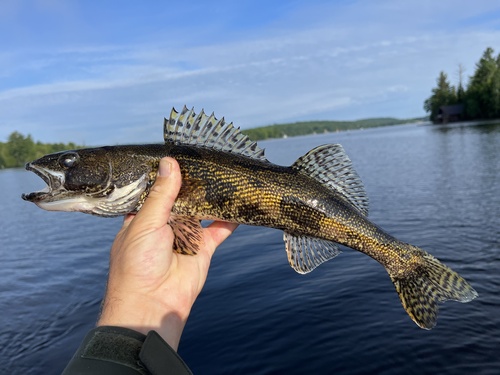
Brassy or sandy brown back and sides with distinct dark brown mottled blotches or "saddles"; silver-white belly; rows of black spots on the dorsal fin.
Key Features
- Distinctly spotted spiny dorsal fin
- No white patch on the lower tail lobe (unlike Walleye)
- Slender, torpedo-shaped (fusiform) body
- Rough, sandpaper-like skin over the gill covers
When You’ll See Them
Behavior
The Sauger is a highly mobile and migratory fish, known for traveling long distances within river systems to reach preferred spawning grounds. Unlike many other freshwater fish that prefer clear water, Saugers thrive in turbid, murky environments. Their eyes are specially adapted to gather light in low-visibility conditions, giving them a significant predatory advantage over their prey during the twilight hours.
These fish are generally found in schools and are well-adapted to life in moving water. They spend most of their time near the bottom of deep river channels or large lakes, using their streamlined bodies to hold steady against fast currents with minimal effort. While they are relatively shy, they are a prized catch for anglers due to their elusive nature and delicious meat.
EverydayEarth exclusive
Camera Tips
To capture the Sauger on camera, you will need a specialized submersible trail camera or an action camera with an underwater housing and external power source. Because Sauger prefer murky, turbid water, visibility is your biggest challenge. Look for 'scouring holes' or deep pools below river dams (tailwaters) where Sauger congregate, especially during the spring spawning run. Placing your camera near rocky bottoms or submerged logs at depths of 10 to 20 feet is most effective.
Since Sauger are most active in low light, integrated infrared (IR) or low-glow LEDs are essential. Standard white light can often spook them or reflect off suspended silt, creating a 'blizzard' effect on your footage. Angle your camera slightly downward toward the riverbed, as Sauger are benthic dwellers that hug the bottom. If you are in a high-current area, ensure your camera mount is heavily weighted or tethered to a fixed structure like a dock piling or a large boulder to prevent it from being swept away.
To encourage a Sauger to linger in front of your lens, consider using a scent-based attractant. A mesh bag filled with crushed minnows or commercially available fish attractant tied just upstream of the camera's field of view can create a 'scent trail' that leads them directly to your setup. During the fall and winter, focus your efforts on deeper wintering holes where they move to escape the coldest surface temperatures.
Set your camera to record short video clips (15-30 seconds) rather than still photos. Saugers move with a distinct 'dart and hover' swimming pattern that is much better captured in motion. High frame rates (60fps or higher) are recommended if your camera supports it, as it allows you to slow down the footage to see the intricate patterns on their dorsal fins and the unique way they flare their gills while feeding in the current.
Similar Species
Species that look similar or are commonly confused with Sauger.
Frequently Asked Questions
Record Sauger at your habitat
Connect a camera to start building your own species record — AI identifies every visitor automatically.