Scaly Tree Fern
Sphaeropteris cooperi
A towering icon of the Australian bush, the Scaly Tree Fern brings a lush, prehistoric feel to any landscape. With its rapid growth and distinctive 'coin-spotted' trunk, it is a favorite for backyard naturalists and garden photographers alike.
Quick Identification
Size
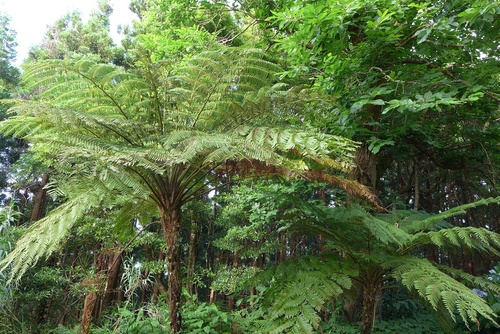
Can reach heights of 10-15 meters (33-50 feet) with a trunk diameter of 30 cm (12 inches) and fronds spanning 2-4 meters (6-13 feet).
Colors
Bright to emerald green fronds; trunk is brown with distinctive light-colored oval leaf scars; base of fronds covered in silvery-white and brown scales.
Key Features
- Distinctive 'coin spots' or oval scars on the trunk from shed fronds
- Frond bases covered in a mix of long white and short brown scales
- Lacy, tripinnate fronds that create a wide, umbrella-like canopy
- Fast-growing vertical trunk reaching up to 50 feet in ideal conditions
When You’ll See Them
Behavior
While the Scaly Tree Fern doesn't exhibit movement in the animal sense, it is one of the fastest-growing fern species in the world. It plays a vital role in its ecosystem by providing a microclimate of shade and humidity for smaller ground-dwelling plants and insects. In a backyard setting, it acts as a structural anchor, often becoming the focal point of a shade garden.
This species is highly adaptable but thrives in areas with consistent moisture. Unlike many other tree ferns, it is relatively hardy and can tolerate more direct sunlight if its roots are kept cool and wet. It reproduces via spores found on the underside of its fronds, which are dispersed by the wind to find new places to take root.
EverydayEarth exclusive
Camera Tips
Capturing the Scaly Tree Fern on a backyard camera is best approached through time-lapse photography rather than motion-triggered video. Because the growth of a new 'fiddlehead' (crozier) is so rapid, setting your camera to take one photo every hour over a period of two weeks will produce a stunning video of the frond uncurling and expanding. Position the camera about 2-3 feet away from the crown of the fern to catch this prehistoric-looking process in detail.
For static shots, the 'coin spots' on the trunk are the most photogenic feature. Mount your camera at chest height, angled slightly upward to emphasize the height of the trunk and the radial pattern of the scars. This angle also captures the underside of the canopy, which looks spectacular when backlit by the morning sun. If you are using a motion-sensor camera, be aware that wind-blown fronds can trigger 'false positives'; reducing sensitivity or masking the top of the frame can help prevent hundreds of empty clips.
To truly highlight the texture of the Scaly Tree Fern, aim for 'Golden Hour' lighting—shortly after sunrise or before sunset. The low-angle light catches the silvery scales at the base of the stalks, making them shimmer against the dark trunk. If your camera has a macro setting, try to get a close-up of the sori (spore cases) on the underside of a mature frond; they appear as organized rows of tiny brown dots that add a scientific layer to your wildlife documentation.
If you are monitoring the fern to see what wildlife it attracts, place the camera higher up, looking down into the crown. Many birds, such as honeyeaters or scrubwrens, frequently visit the crown to forage for insects or use the fibrous trunk material for nesting. Ensure the camera is secured tightly to a post or nearby tree, as the swaying of the fern itself during a breeze will make for shaky footage if the camera is mounted directly to the trunk.
Similar Species
Species that look similar or are commonly confused with Scaly Tree Fern.
Frequently Asked Questions
Record Scaly Tree Fern at your habitat
Connect a camera to start building your own species record — AI identifies every visitor automatically.