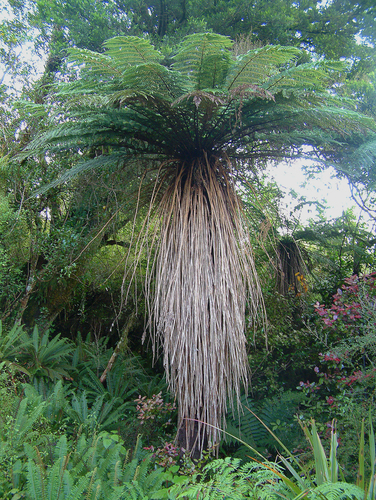
Soft Tree Fern
Alsophila smithii
Known as the kātote, the Soft Tree Fern is the elegant, cold-hardy soul of the New Zealand bush. Its distinctive skirt of fallen fronds creates a bustling high-rise apartment for backyard biodiversity.
Quick Identification
Size
Trunk height 2–8 meters (6.5–26 feet); fronds 1.5–3 meters (5–10 feet) long
Colors
Bright emerald green fronds, pale brown to straw-colored scales, and a chestnut-brown trunk
Key Features
- Persistent 'skirt' of dead brown fronds hanging around the trunk
- Soft, non-prickly texture on the midribs
- Pale brown, papery scales at the base of the fronds
- Horizontal or slightly drooping frond habit
When You’ll See Them
Behavior
In your backyard ecosystem, the kātote acts as a slow-moving architectural giant. It expands its crown by unfurling tightly coiled fronds, known as koru, usually during the warmer months. It is less aggressive in its growth than the Rough Tree Fern, making it a peaceful neighbor for smaller understory plants and a preferred nesting or sheltering spot for small forest birds seeking protection from the wind.
EverydayEarth exclusive
Camera Tips
Position your camera approximately 5 feet off the ground, angled slightly upward into the center of the crown. This 'worm's eye view' highlights the symmetry of the fronds and captures the delicate brown scales that give the species its name. If you are placing the camera in a very shaded area, ensure your device's infrared or low-light settings are optimized, as the dense canopy of a tree fern can create very dark conditions even during the middle of the day.
Don't ignore the 'skirt' of dead fronds! This area is a hotspot for animal activity. If you want to see who lives in your fern, place a camera focused on the trunk about 3 feet away. You are likely to capture Pīwakawaka (Fantails) or Silvereyes darting into the dead fronds to hunt for spiders and insects. For these shots, use a high-speed trigger setting to catch the fast movement of the birds against the static brown backdrop of the dead foliage.
During the winter, keep an eye on your camera lens. The Soft Tree Fern thrives in damp, humid environments, which can lead to lens fogging or condensation. Using a small rain shield or placing the camera slightly under the overhang of the fern's own fronds can help keep your shots clear while providing an intimate look at the plant's structure during the rainy season.
Similar Species
Species that look similar or are commonly confused with Soft Tree Fern.
Frequently Asked Questions
Record Soft Tree Fern at your habitat
Connect a camera to start building your own species record — AI identifies every visitor automatically.