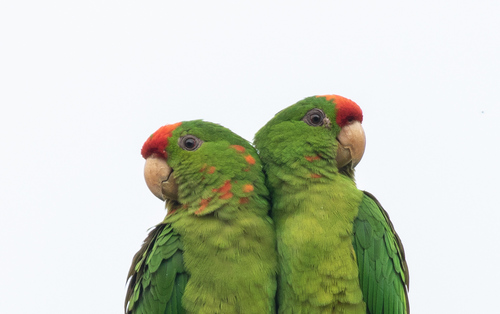
Scarlet-fronted Parakeet
Psittacara wagleri
A social and spirited resident of the northern Andes, the Scarlet-fronted Parakeet is easily recognized by its vibrant green plumage and signature red crown. Often traveling in boisterous flocks, these intelligent birds are a spectacular sight for any backyard observer in their range.
Quick Identification
Size
32-35 cm (12.5-14 in) long; weight approximately 150-180g (5.3-6.3 oz)
Colors
Primary emerald green body with a bright scarlet-red forehead and crown; some individuals have red flecks on the throat and thighs; pale ivory-colored beak.
Key Features
- Distinctive scarlet forehead and fore-crown
- Long, tapering graduated tail
- Large, horn-colored bill
- Yellowish-green underparts
When You’ll See Them
Geographic range
Where Does the Scarlet-fronted Parakeet Live?
Native to the South American continent, the Scarlet-fronted Parakeet is primarily found in the northern Andes and the coastal mountain ranges. Its core range is situated within Colombia and Venezuela, where it thrives in subtropical and tropical zones. While largely restricted to these two countries, their ability to adapt to modified landscapes means they are frequently seen in both remote wilderness and the leafy outskirts of major northern South American cities.
Basemap © OpenStreetMap contributors
Behavior
The Scarlet-fronted Parakeet is an exceptionally social bird, rarely seen alone. They typically travel in noisy, tight-knit flocks that can number from a dozen to over a hundred individuals. These groups are highly vocal, often heard long before they are spotted, emitting a series of harsh, screeching calls that help the flock stay together while navigating through dense forest canopies or across open valleys.
These parakeets are remarkably agile flyers, capable of making sharp turns through timbered terrain. Much of their day is spent foraging in the upper canopy, where they use their powerful beaks as a 'third foot' to climb and stabilize themselves while reaching for fruit. In suburban areas, they have become somewhat accustomed to human presence, though they remain naturally wary and will take flight simultaneously if the flock senses a predator.
EverydayEarth exclusive
Camera Tips
To capture high-quality footage of the Scarlet-fronted Parakeet, camera placement is everything. These birds are predominantly arboreal, so mounting your camera at a significant height—between 10 and 20 feet—facing a known favorite perch or a fruiting tree like a fig or guava is essential. If you are using a backyard setup, aim the camera at high-platform feeders or elevated water basins, as these social birds love to bathe in groups.
Because these parakeets move in fast, erratic bursts, set your AI-powered camera to a high trigger sensitivity and a fast shutter speed. If your camera supports video, opt for 60fps to smooth out their rapid wingbeats and head movements. They are most active during the first few hours of light, so ensure your camera is positioned to avoid direct morning sun flare, which can wash out the brilliant red of their crowns.
Using a 'birdbath' lure is one of the most effective strategies for this species. A dripping water feature or a solar-powered fountain will attract their attention from a distance. Since they are Near Threatened and sensitive to habitat changes, avoid using invasive playback calls; instead, rely on providing a consistent, safe water source and native plantings to draw them into the camera's field of view.
Similar Species
Species that look similar or are commonly confused with Scarlet-fronted Parakeet.
Frequently Asked Questions
Record Scarlet-fronted Parakeet at your habitat
Connect a camera to start building your own species record — AI identifies every visitor automatically.