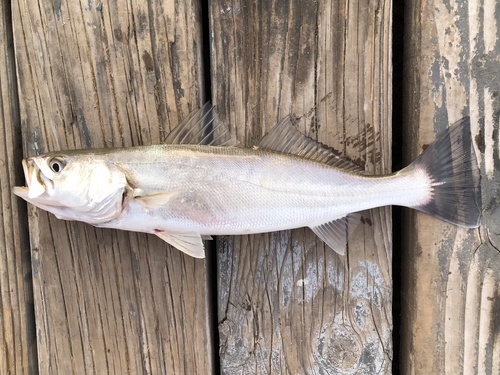
Shortfin Corvina
Cynoscion parvipinnis
A shimmering silver phantom of the Pacific surf, the Shortfin Corvina is a vocal predator known for its stealth and speed. Master of the coastal shadows, this 'croaking' hunter brings the drama of the deep right to the edge of the shore.
Quick Identification
Size
Typically 30-50 cm (12-20 inches), but can reach 70 cm (28 inches) and up to 4.5 kg (10 lbs).
Colors
Silvery-blue or leaden-gray on the back, transitioning to bright silver sides and a white belly; fins may have a yellowish or dusky tinge.
Key Features
- Large mouth with two prominent canine-like teeth in the upper jaw
- Short pectoral fins that do not reach the tips of the pelvic fins
- Elongated, streamlined body with a notched dorsal fin
- Finely serrated preopercle (gill cover) edge
When You’ll See Them
Geographic range
Where Does the Shortfin Corvina Live?
Native to the warm-temperate and subtropical waters of the Eastern Pacific Ocean, the Shortfin Corvina is primarily found from Southern California in the United States down through the Gulf of California to Nayarit, Mexico. Its core population resides along the Pacific coast of the Baja California peninsula, where it thrives in shallow coastal lagoons. While historically found as far north as Santa Barbara, its presence in upper California is now most common during years with warm-water El Niño events.
Basemap © OpenStreetMap contributors
Behavior
The Shortfin Corvina is a schooling predator that patrols the energetic surf zones and quiet backwaters of the Eastern Pacific. Like many members of the drum family, they are known for their ability to produce a low-pitched "croaking" sound using specialized muscles to vibrate their swim bladder. This vocalization is most intense during the spawning season and during the evening hours, serving as a primary means of social communication within schools.
These fish are highly mobile hunters, moving into shallow tidal flats and estuaries during the high tide to pursue prey and retreating to deeper channels as the tide ebbs. In coastal residential areas, they have adapted well to human infrastructure, often lingering near dock pilings and bridge supports where they use the shadows to ambush smaller fish. They are generally wary of direct human presence but are frequently seen by those with underwater cameras or dock lights.
EverydayEarth exclusive
Camera Tips
To capture the Shortfin Corvina on camera, you will need a specialized underwater setup or a submersible trail camera. For homeowners with coastal property or docks, the most effective strategy is to mount your camera 1 to 2 meters below the low-tide line, facing a structural element like a dock piling. These structures act as natural focal points for Corvina as they wait for the current to sweep baitfish toward them.
Lighting is the most critical factor for nighttime coastal capture. Use a "green" underwater dock light to attract plankton and small baitfish; the Shortfin Corvina will naturally follow this food source. Position your camera on the edge of the light's radius rather than in the center, as these predators prefer to lurk in the "strike zone" where the light meets the darkness. This positioning prevents the camera from being overexposed by the light while capturing the dramatic moment the fish darts in for a strike.
Because Corvina move with the tides, the best time to record is during a rising tide or just after high tide when the water is clear and the fish are most active. Set your camera to record high-definition video at 60 frames per second if possible. Their hunting strikes are incredibly rapid—often lasting less than a second—and standard photo modes will likely only capture a silver blur. Longer video clips of 30 to 60 seconds will also allow you to hear their distinctive "drumming" sounds if your housing has a sensitive microphone.
Similar Species
Species that look similar or are commonly confused with Shortfin Corvina.
Orangemouth Corvina
Features a bright orange interior mouth lining and is more common in brackish water like the Salton Sea.
White Seabass
Grows much larger and lacks the two prominent upper canine teeth characteristic of the Corvina.
Yellowfin Croaker
Has a small chin barbel and distinct yellow fins, which the Shortfin Corvina lacks.
Frequently Asked Questions
Record Shortfin Corvina at your habitat
Connect a camera to start building your own species record — AI identifies every visitor automatically.